
Sonia Sotomayor Elementary School Engages MiEN to Create New Learning Spaces
Many school districts are seeing decreases in enrollment, but Chula Vista Elementary School District (CVESD)—the largest elementary school district in California—is in the middle of a growth spurt. When it opened a new elementary school for the 2024-25 school year, CVESD set out to create a very engaging, welcoming and supportive environment for its students, teachers and staff.
In this post, we'll take a look at:
“Our goal is to shift pedagogy toward a ‘culture of thinking’ that supports more student agency and more effective use of the learning space,” says Ashley Campos, coordinator of innovation. “As part of that mission, we knew we needed innovative furnishings for the learning environments, which would go hand-in-hand with that work.”
And with that, the new Sonia Sotomayor Elementary facility became the first of its kind for the growing district. The campus would not only serve an expanding student body, but its structure and furnishings were specifically designed to support the most effective teaching and learning experience possible.
“It’s not all butterflies and unicorns, but I feel really optimistic and hold a strong belief that change has to start somewhere,” Campos is quick to point out. “Ultimately, we’re learning what we can about better meeting basic student learning needs through comfort and wellbeing, and in the spaces where they spend so much of their time every day.”
Collaboration, Flexibility & Comfort
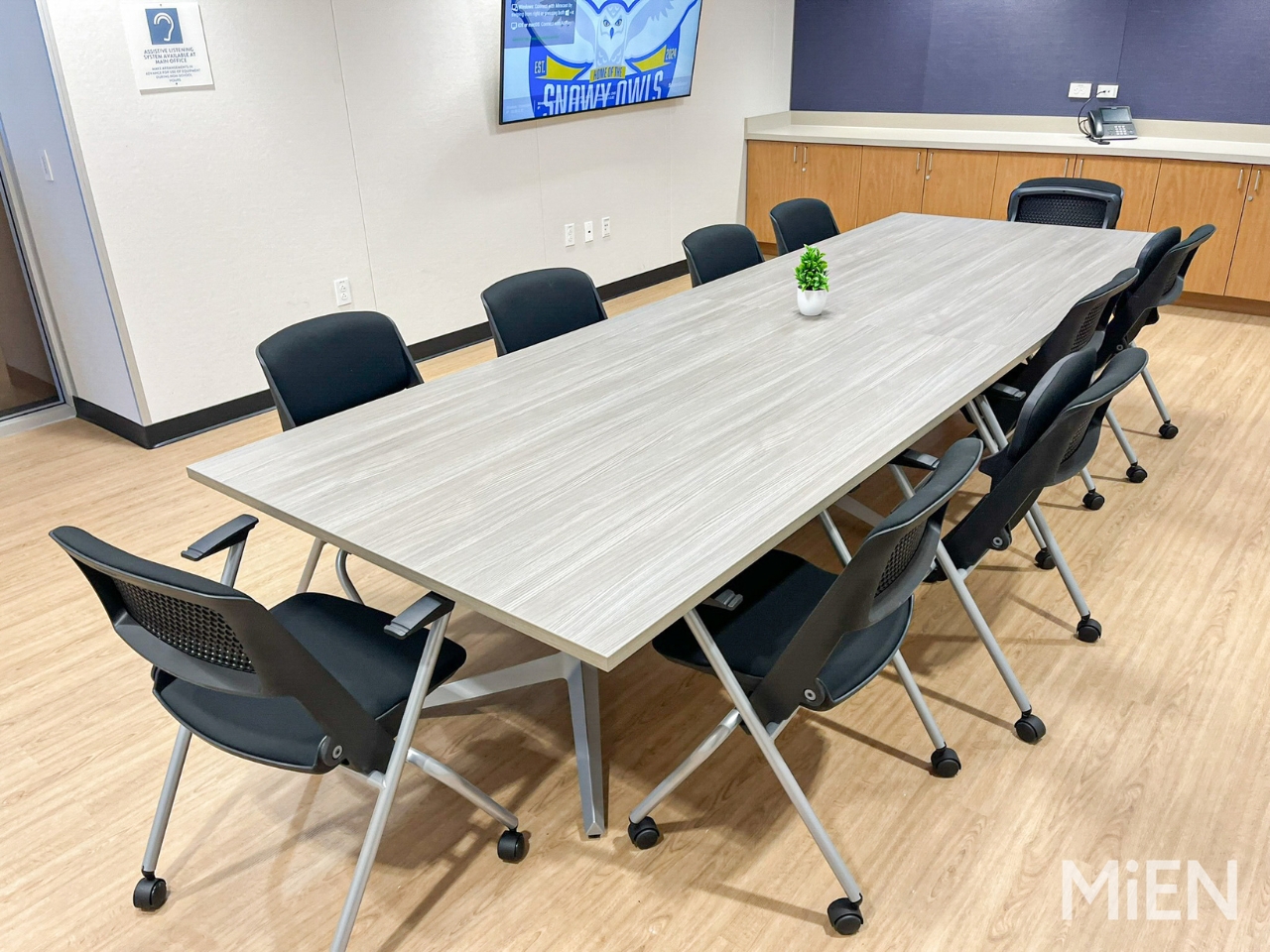
Knowing that kindergartners learn and interact with their environments differently than fourth-graders do, Campos worked closely with a committee of stakeholders that included district administrators, site principals and classroom teachers to develop a “kit of parts,” or packages of furnishings. Based on specific grade levels, those kits of parts were designed to support active learning and engagement in the classroom.
They also visited two other innovative campuses in San Diego County to gather anecdotal information and observe students and teachers in those settings. “Having these stakeholders involved was helpful because no single person should be making all of those important decisions,” Santos says. “You want it to be a group consensus to make sure you’re doing what you collectively believe is best for students.”
Once the final kits were decided and furniture placed, the site principal began actively hiring teachers for this new school. Once onboard, those instructors participated in three different professional learning dates plus additional ones that were added during the school year.
Having that “unprotected time” with teachers was extremely important to Campos and her team. “It was pure gold,” she says. “We used that time to jump into why and how we were designing classroom spaces in a way that supports collaboration, flexibility and comfort.”
Meeting Specific Developmental Requirements
To outfit its new elementary campus, CVESD worked with MiEN to select a variety of tables, chairs, and soft seating that would accommodate students from ages four to 12. “It’s a lot of moving pieces and a lot of moving bodies, and we didn’t want to just have a single type of furniture for the entire campus,” Campos points out.
Instead, the district set out to meet the specific developmental requirements of its grade level bands. It is segmented by individual grade and then drilled down into the exponential growth taking place as students move from pre-K to kindergarten to first grade—factoring in both the learning itself and the size of the students as they grow. The district took a similar approach with second and third graders (group 2), and then students in grades 4-6 were in the third group.
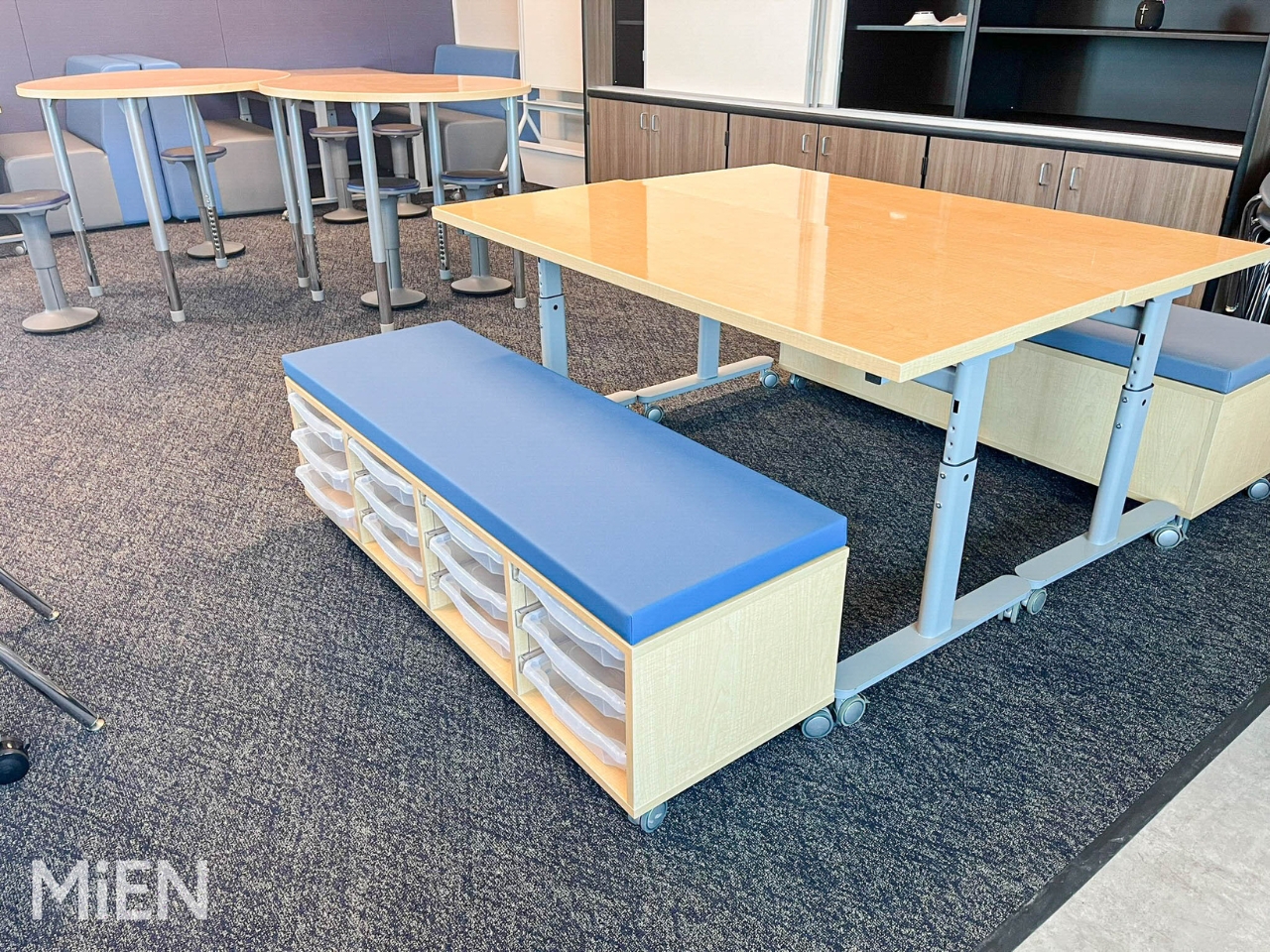
Some of the special furniture pieces selected include PAL tables with curved leg desks and dividers, which are great for students who need some isolation in order to focus and concentrate. “We chose a dark color for the dividers to help create a sense of calm, quiet, and safety,” says Campos. “No one student was actually going to be ‘living’ in that workspace all day, but it was an option within the environment for students who felt it met their needs.”
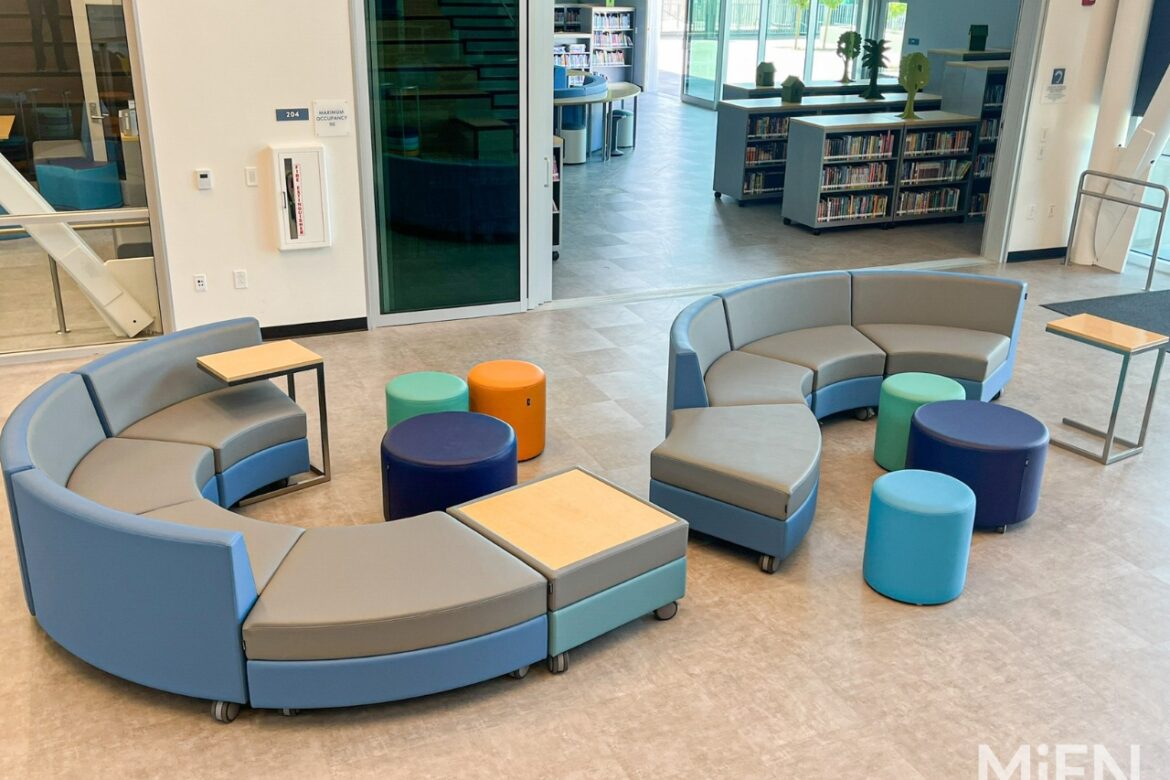
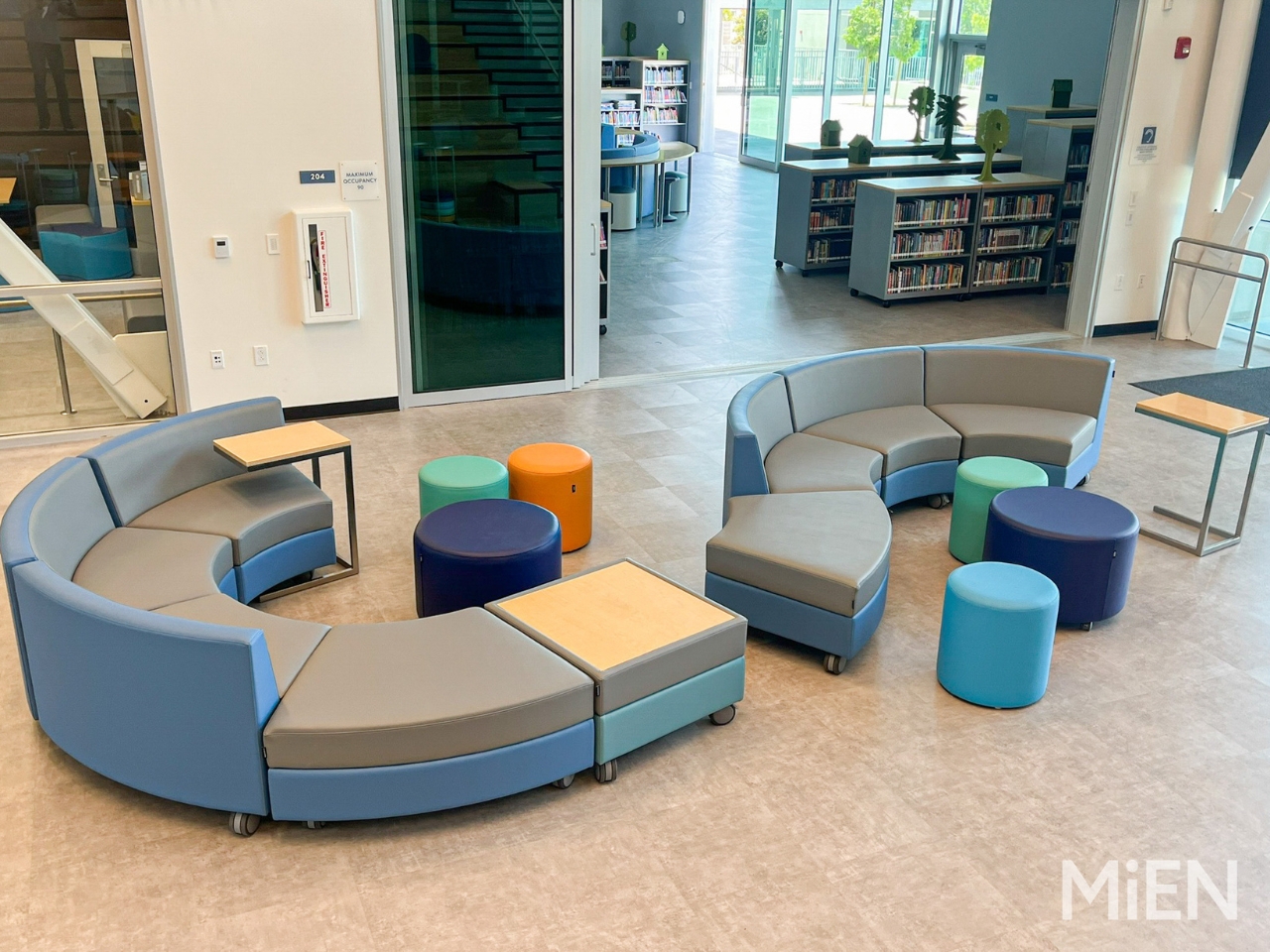
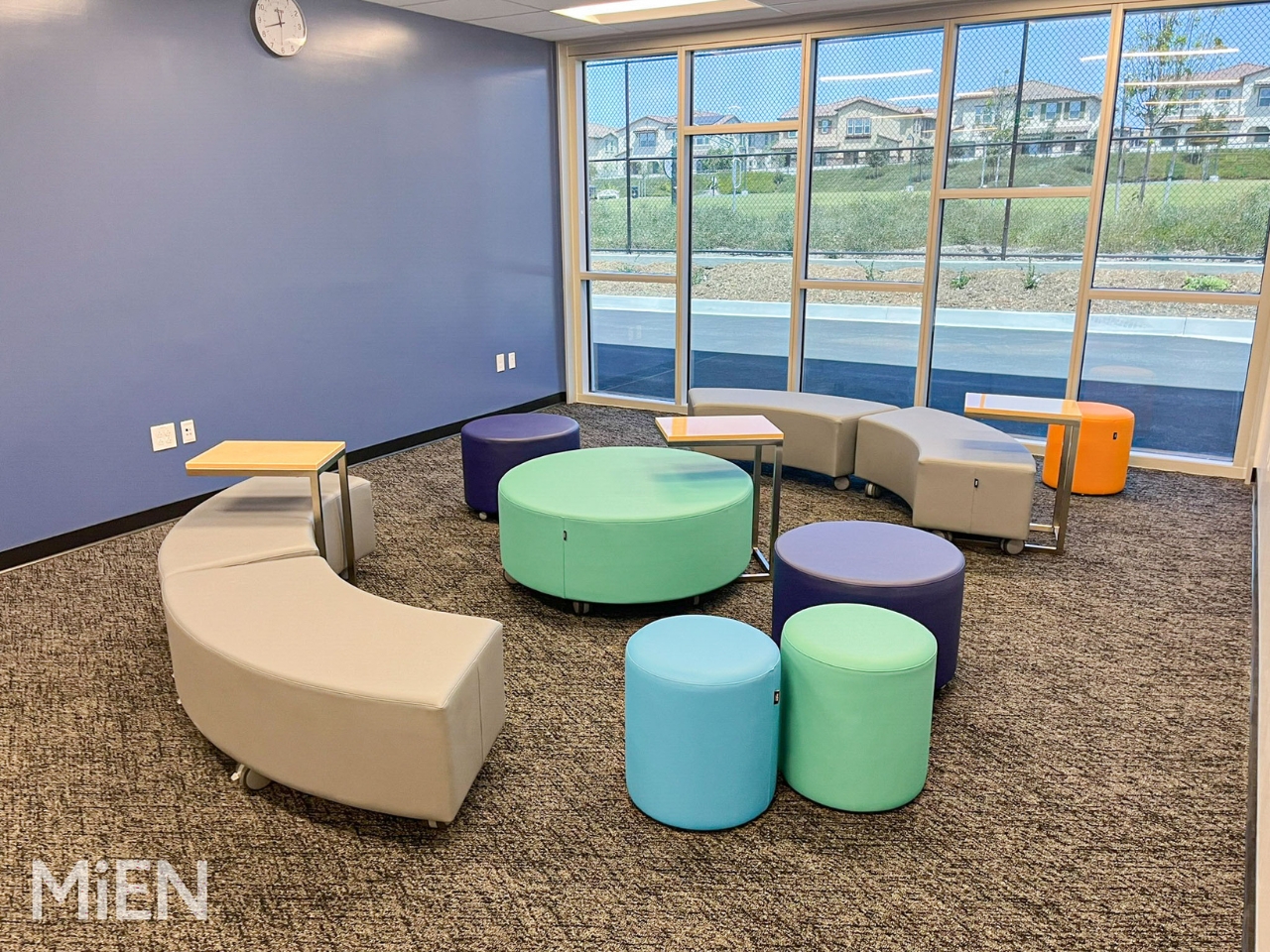
In Sonia Sotomayor Elementary’s learning commons—a common space similar to a school library—Campos selected furniture that clearly supports learning and incorporates quite a bit of soft seating. “One of the objectives for that space was to provide a place for students to recharge,” she explains. “It’s a place where students can come and kind of move as they need to and choose how they want to sit and relax.”
The learning commons features a large number of “Grow pieces” and incorporates natural light and AstroTurf that creates the illusion of an outdoor space. “We were really trying to capitalize on the biophilic elements that were in this space, so those Grow Series pieces fit perfectly,” says Campos. “The students love the Grow pieces and the learning commons space itself, which provides that tactile stimulation. It really looks like grass and makes it feel as if you were outside.”
No Stone Left Unturned
Reflecting on the role MiEN played in helping CVESD bring its vision to life, Campos says the provider of innovative educational furniture solutions was the perfect partner for the new school project. “Working with MiEN was fantastic. They were responsive, and it felt like they were prioritizing our project,” says Campos, who also appreciates how the company customized its recommendations based on the district’s specific needs.
“The students love the Grow pieces and the learning commons space itself, which provides that tactile stimulation. It really looks like grass and makes it feel as if you were outside,” says Campos.
For example, the district wanted all table work surfaces to have high-gloss finishes so students could write on them with dry-erase markers. The surfaces could then be easily cleaned and reused by the next group of students. “MiEN basically didn’t even question it; they told us it was completely possible,” says Campos. “They just knew that any table we were talking about should be high-gloss and made sure that happened.”
MiEN also provided on-site training and professional learning for the teachers who would be using and interacting with the furniture and fixtures daily. “The work is only beginning once that furniture gets installed, so I loved that our teachers had that extra layer of support,” says Campos. “It helped me recognize and hold true that MiEN is thinking about what’s best for students as they’re designing these pieces and making suggestions for what we ultimately chose to put into those environments.”
A School Designed for Students
As she observes students learning, collaborating, and having fun in their brand-new elementary school, Campos hopes they realize the space was truly designed with them in mind. As they familiarize themselves with the new environment, she expects to see more students independently navigating the campus, moving freely in and out of classrooms, and regularly using the thoughtfully designed common spaces.
“Going forward, we’ll see a sense of ease about how everyone is living on campus; that’s truly what I’m hoping for,” Campos says. “As certain student behaviors decrease due to knowing how to better interact with the environment, it will also lead to them becoming even more engaged and focused in their learning.”