

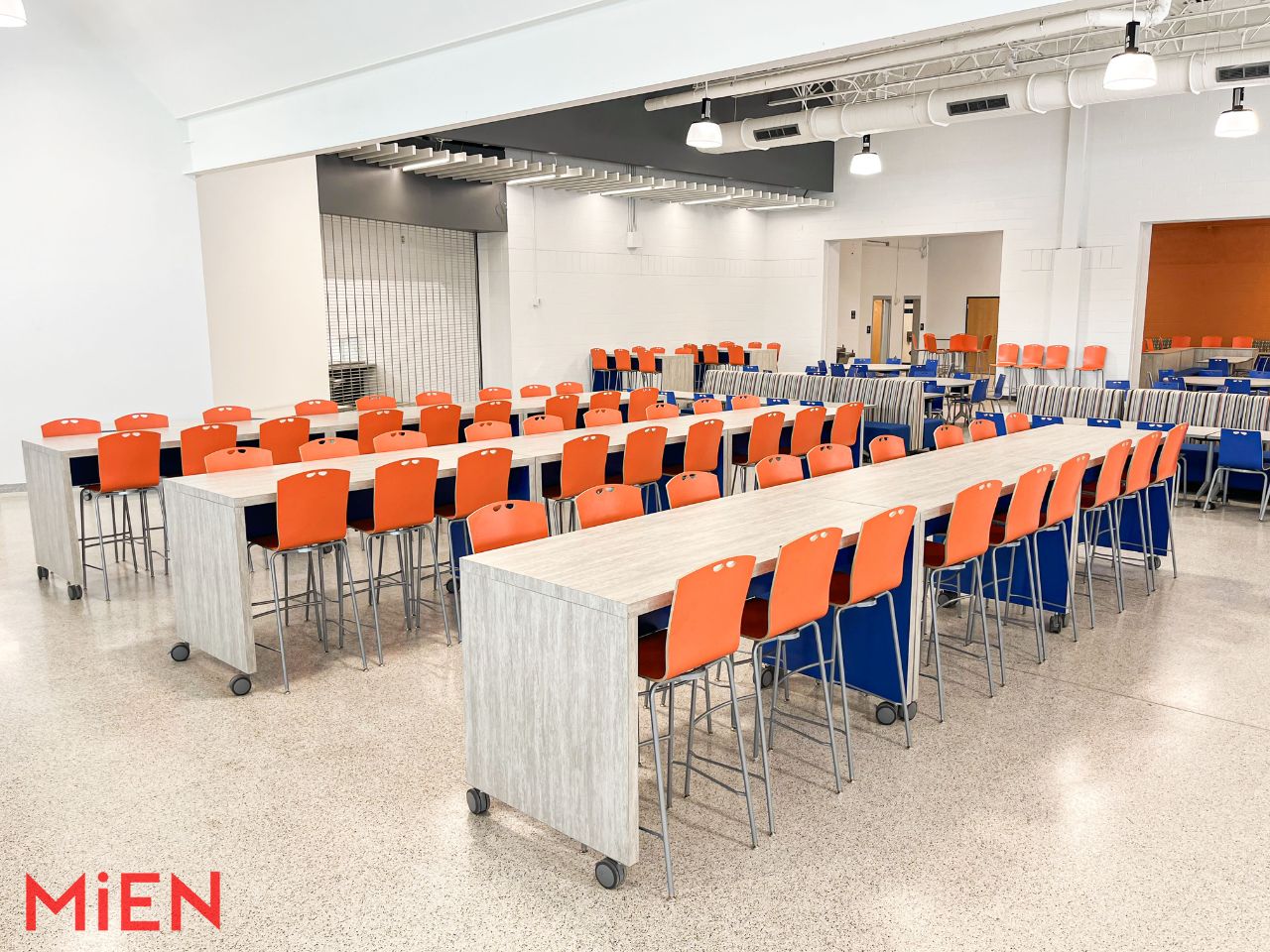
5 Key Design Trends Shaping the Future of K-12 Cafeterias
Historically, school cafeterias have been utilitarian spaces designed to serve one purpose: providing students with a place to eat at school. These food halls were useful, yet they remained largely uninspiring until recent design trends began to transform the function of cafeterias in K-12 schools.
In this post, we'll take a look at:
Modern K-12 cafeteria spaces are no longer just a place for eating meals; they have evolved into central hubs where students, teachers, and the community can come together to recharge, connect, and learn. Today’s renewed K-12 cafeteria spaces nourish students and help cultivate a positive school culture. In order to accommodate the different purposes modern cafeterias serve, schools should reimagine their facilities with a multifunctional design approach.
Drawing insights from our white paper, From Lunchtime to Learning: Modern Cafeterias in K-12 Education, we’ve identified five key trends for transforming school cafeterias into vibrant spaces that promote learning, nutrition, and community building.
Adaptable Spaces to Cultivate Community
Similarly to how modern media centers have transformed into centers for learning and collaboration, today’s cafeteria spaces are shifting into centers for school culture and community engagement. The modern cafeteria should be designed as a multifunctional space that brings together the school community through various events, meetings, clubs, and other social activities.
Decades of research emphasize the importance of involving parents in the school community, and making cafeterias into community-centered spaces can help foster strong partnerships between schools and parents. Ensuring these spaces can adapt to a variety of events is a key part of cultivating engagement and connection with families and the community. Multipurpose cafeterias with adaptable, modular and mobile furniture enable the space to change according to its needs and function.


Integrating Technology to Encourage Engagement
Today’s K-12 cafeterias are embracing technology to improve meals, enhance student engagement, and support educational goals. Integration of modern technology, such as interactive screens, enables schools to present daily menus, nutritional information, and even student achievements. Other devices like charging stations keep learners connected during breaks, supporting learning and encouraging socialization.
With technology integrated into the space, multipurpose cafeterias can serve as extensions of the classroom, providing a spacious area where teachers can deliver interactive lessons, lead group activities, and present educational displays. Participating in learning opportunities outside of their main classroom enhances students’ educational experience and fosters a sense of belonging within the school community.
Flexible Seating for Diverse Needs
Traditional rows of bulky cafeteria tables in a fixed layout are being replaced by flexible seating arrangements that meet the changing needs of students and staff. By providing a variety of different types of seating, mobile tables and chairs, and adjustable furniture pieces, schools are able to accommodate the diverse needs of students of all ages and abilities. Flexible seating helps promote a comfortable, inviting environment where students, teachers, and the community can gather.
Furthermore, flexible seating arrangements foster social interaction, encouraging students to interact with a diverse range of peers. Educational environments that provide flexible and adaptable seating arrangements encourage social engagement, which fosters inclusivity, strengthens bonds, and enhances a sense of belonging.


Promoting Inclusivity Through Comfort
Students typically come to the cafeteria during their break times, and they need a space where they can reset, recharge, and refuel. When designing a modern cafeteria, it’s important to create an inviting environment through comfortable seating options, inclusive layouts, and accessible amenities. Comfort can make or break a student’s dining experience and can also affect their mood and behavior as they continue on with their day––which also results in impacts on their learning.
In order to provide students with the benefits that come with relaxing and self-regulating during their lunch breaks, schools must create cafeterias that accommodate students’ diverse requirements for comfort. For instance, some modern cafeterias establish designated spaces for quiet and mindful eating, enabling students to eat in silence or take a moment to themselves. These sensory-friendly spaces are a safe space to decompress, and are crucial for learners with a wide range of needs, including those with autism, ADHD, and sensory processing disorders.
Providing a Welcoming Atmosphere
The atmospheric conditions of a cafeteria are fundamental in creating a space that is both functional and enjoyable. The atmosphere of a modern cafeteria has shifted away from the overstimulating and uninspiring spaces of the past to become more of a gathering place. A pleasant cafeteria atmosphere is not just about the food, but also includes the overall cafeteria experience, which must include opportunities for social interaction and relaxation. The combination of good food and an enjoyable environment can result in a warm and welcoming atmosphere.
Several features contribute to the atmosphere of modern cafeteria spaces and influence how well students can relax and socialize. First and foremost, acoustic solutions are crucial to keep noise levels down. Schools should also consider ways to connect the cafeteria to nature, incorporating natural light, greenery, and access to outdoor seating when possible. Finally, artwork and aesthetically-pleasing design elements are an easy way to make a positive impact on students’ wellbeing. All of these features combine to cultivate a more peaceful and welcoming dining atmosphere, which can positively affect students’ mood, productivity, creativity, and relaxation.
Shape the Future of K-12 Cafeterias
To learn more about transforming school cafeterias into fresh and vibrant new environments, download our full white paper, From Lunchtime to Learning: Modern Cafeterias in K-12 Education. Investing in innovative cafeteria spaces can ignite school culture and lead to better outcomes for students. Contact a MiEN representative to discuss a cafeteria modernization project at your school!