
How Do You Design a Modern K-12 Media Center? (6 Essential Spaces)
A modern K-12 media center is a multi-functional learning commons designed to support student-directed learning, collaboration, and technology integration.
According to our white paper, Do School Libraries Still Matter?, effective libraries break down the barriers between physical and digital spaces. We use this research to give districts the exact framework they need to turn aging libraries into future-ready hubs that directly improve academic outcomes.
By implementing these six essential zones, schools can build a media center that meets the demands of modern education.
How do collaborative media spaces improve student academic outcomes?
Our research shows that 75% of students do not know how to locate research articles, and 60% fail to verify the accuracy of information. Collaborative spaces allow students to work together on technology-enabled assignments while media specialists guide their digital literacy.
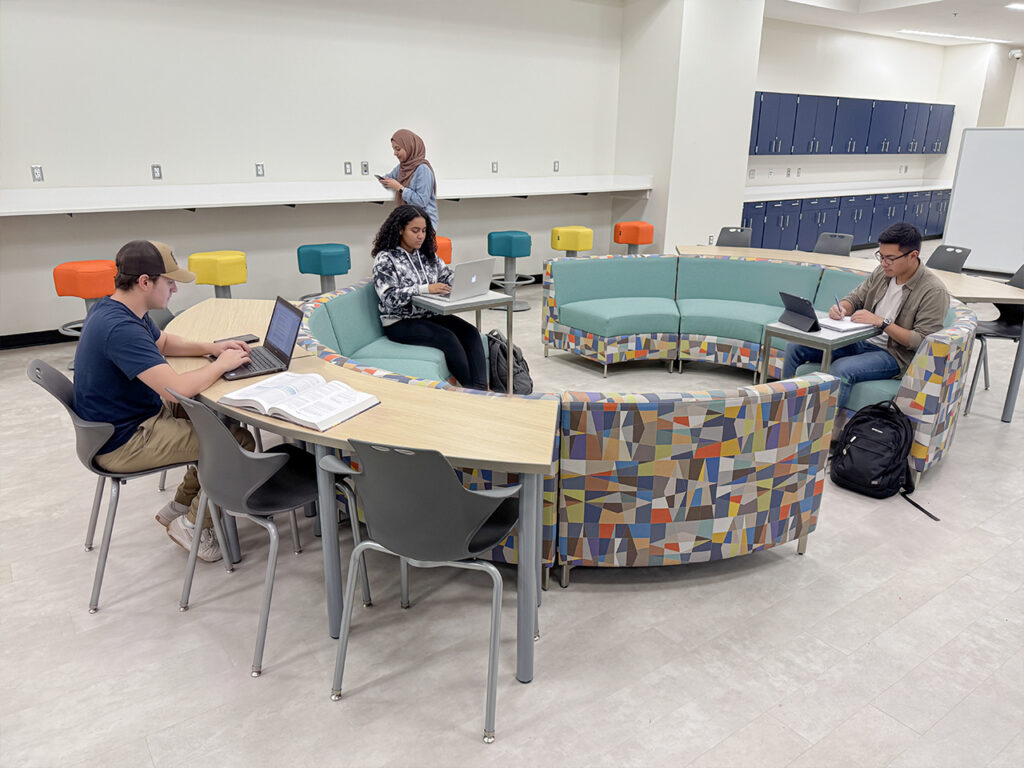
To execute this, use comfortable, modular seating that faces a central presentation area or wall-mounted screen.
The MiEN Solution: The Chameleon Lounge series provides adaptable, tech-friendly group seating that supports active learning.
How does flexible library furniture maximize instructional ROI?
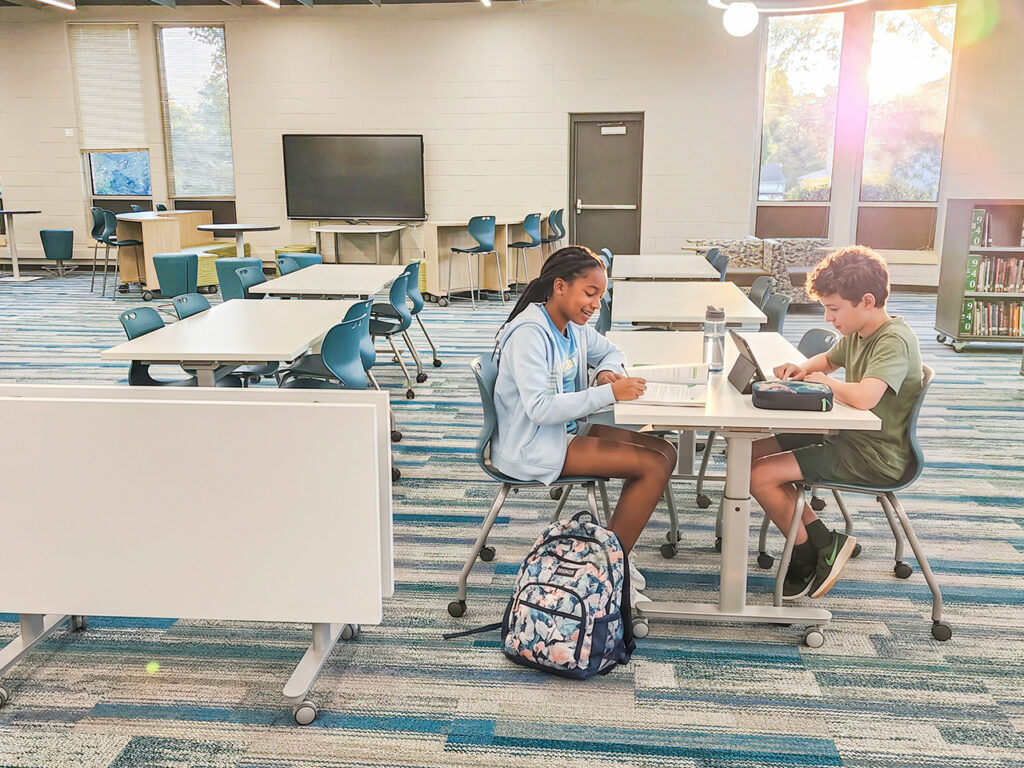
Flexible instructional spaces allow media specialists to instantly transition a room from a lecture format to small-group collaborative work, eliminating the need to build separate rooms for different teaching methods.
Equip the space with lightweight, mobile desks that nest together to open up floor space when not in use.
The MiEN Solution: OTM Height Adjustable Flip-Top Tables give educators complete control over their room layout, maximizing usable square footage.
How do library makerspaces prepare students for STEM careers and workforce readiness?
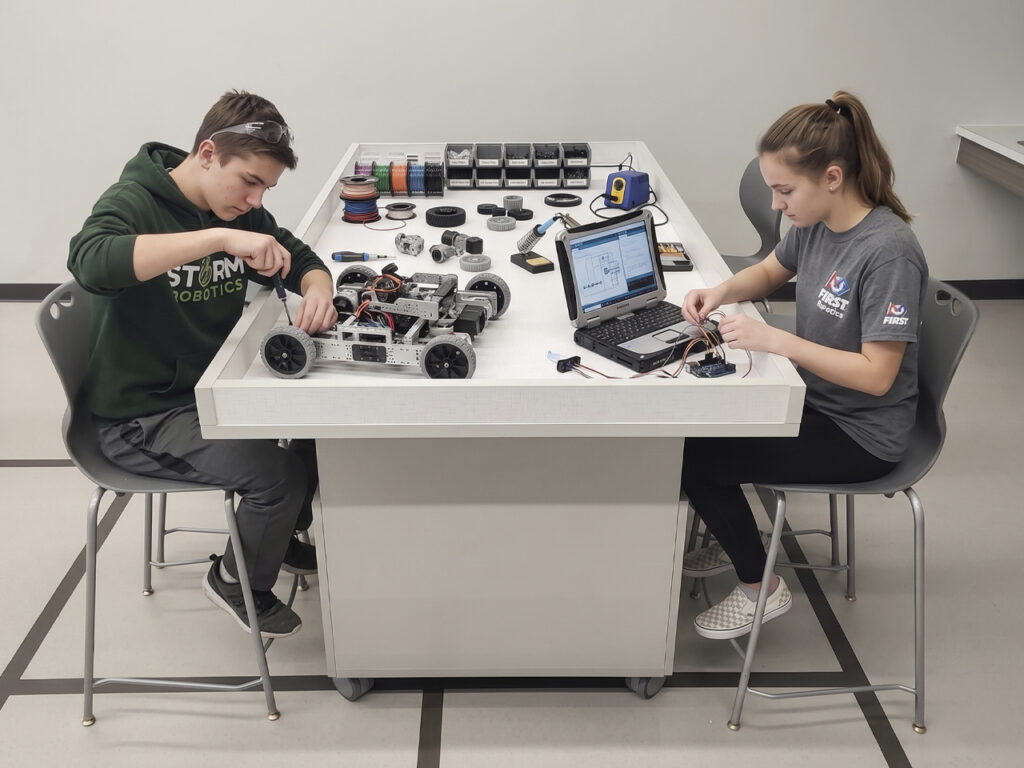
Makerspaces provide hands-on environments where students build critical STEM competencies, develop entrepreneurial skills, and practice self-directed learning required by National School Library Standards.
Provide highly durable, mobile workstations with integrated storage to keep robotics and engineering equipment organized.
The MiEN Solution: The KIO Tinker Table and Robotics Table deliver heavy-duty, mobile workspaces designed for hands-on creation.
What is the impact of library lounge areas on student behavior?
Dedicated lounge areas act as a “third space” on campus, which community developers identify as the best predictor of strong place attachment and improved social-emotional behavior.
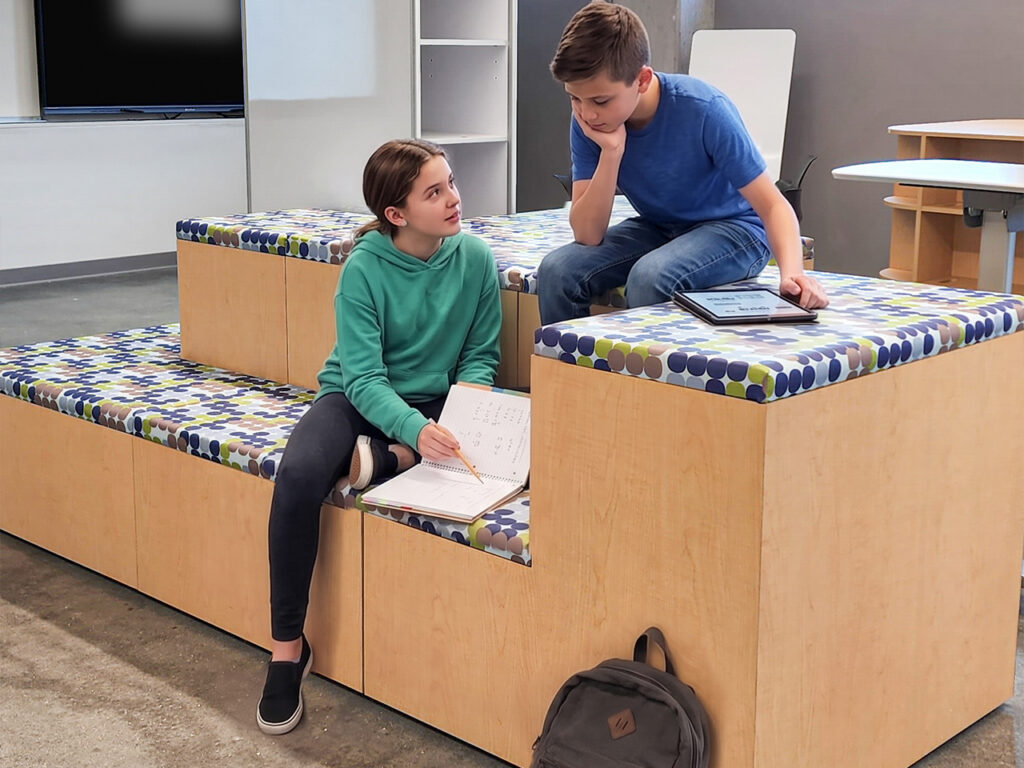
Utilize tiered seating or curved soft seating to create a natural, enclosed meeting hub within the larger open library.
The MiEN Solution: FLEX Steps EVO gives students a comfortable, multi-level area to gather, read, or collaborate.
Why are device charging stations critical for 1:1 school programs?
With 1:1 device programs, students rely on the library for 24/7 digital access to power their Chromebooks and tablets to complete assignments.
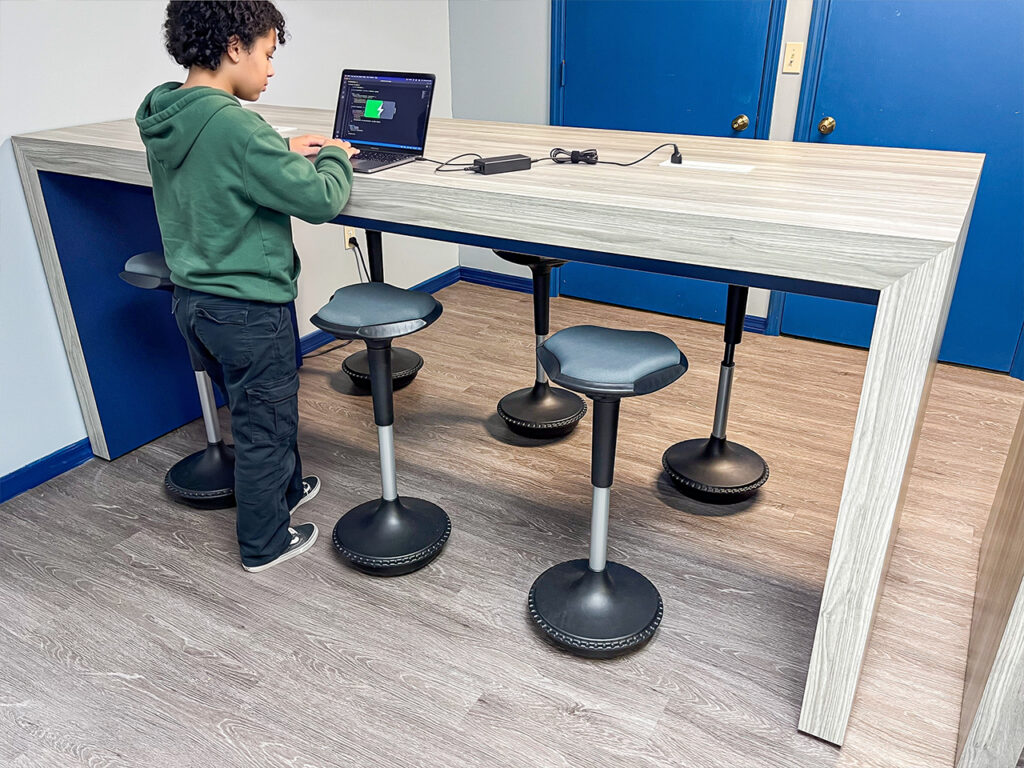
Integrate power outlets directly into large, collaborative workspaces to eliminate tripping hazards and keep students focused.
The MiEN Solution: The SHARE Table features built-in power. Pair it with RKR stools to build a high-efficiency tech zone.
What is the best way to display and store physical books?
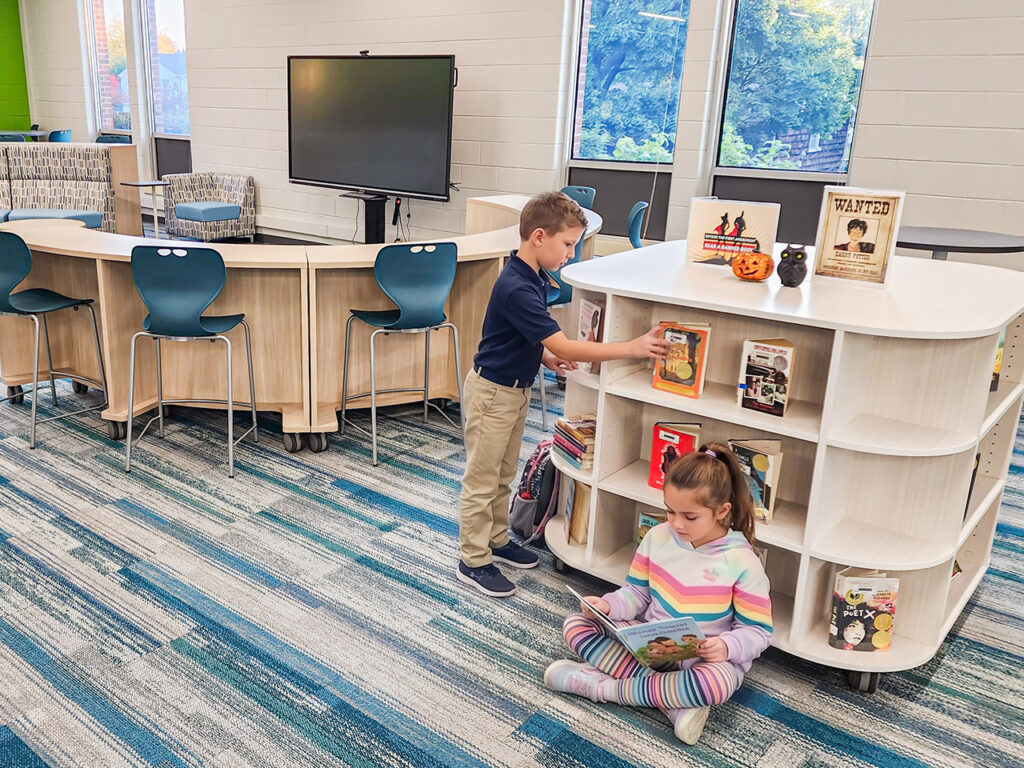
While digital resources address equity issues, physical books remain foundational to literacy. Storage must be intuitive, accessible, and mobile to maximize the library’s usable layout.
Use low-profile, curved, and wheeled shelving units that can be pushed aside for large school-wide events.
The MiEN Solution: The KIO 360 Bookcase provides massive storage in a compact, mobile footprint.