
How Collaboration Can Transform Special Education Classrooms
Special education teachers and paraprofessionals have a shared purpose: creating nurturing and effective learning environments that support student needs and help learners reach their personal and academic goals. Together, special education teachers and paraprofessionals form a powerful duo. By collaborating with one another and cultivating positive relationships, these educators can dramatically improve both their own job satisfaction and the student outcomes in their classrooms.
In this post, we'll take a look at:
Here are three ways special education teachers and paraprofessionals can collaborate to transform special education classrooms:
1. Establishing clear roles and responsibilities
Special education requires a wide range of skills and expertise from both teachers and paraprofessionals. While classroom decision-making may rely on role hierarchy, the overall system of roles and responsibilities should focus instead on leveraging each team member’s unique strengths, experiences, and relationships with students.
For effective collaboration, begin with discussions about how each team member will contribute to classroom teaching and learning. Teachers hold a wide range of tools and knowledge to shape pedagogy and curriculum design, while paraprofessionals often have a more nuanced understanding of individual student needs and behaviors. By combining these perspectives to create balanced roles and responsibilities, it is possible to create a cohesive learning environment that is more tailored to students’ needs.
2. Developing effective communication systems
In special education classrooms, the reality is that sometimes it gets loud, disorderly, and busy, which can result in communication breakdowns between teachers and paraprofessionals. To avoid this common challenge, it’s crucial to develop communication systems that work in the context of your unique classroom.
To ensure students’ complex needs are being addressed, documentation and planning are key. Effective teams implement multiple means of communication to share information, observations, and ideas. Daily briefings, weekly planning sessions, and digital communication tools keep special education teams on the same page––even when the classroom gets hectic.
3. Creating learning spaces that support collaboration
Learning space design in the special education classrooms contributes to teacher and paraprofessional success just as much as it supports student needs. The physical environment plays a significant role in facilitating effective team dynamics and ensuring ongoing success of classroom systems.
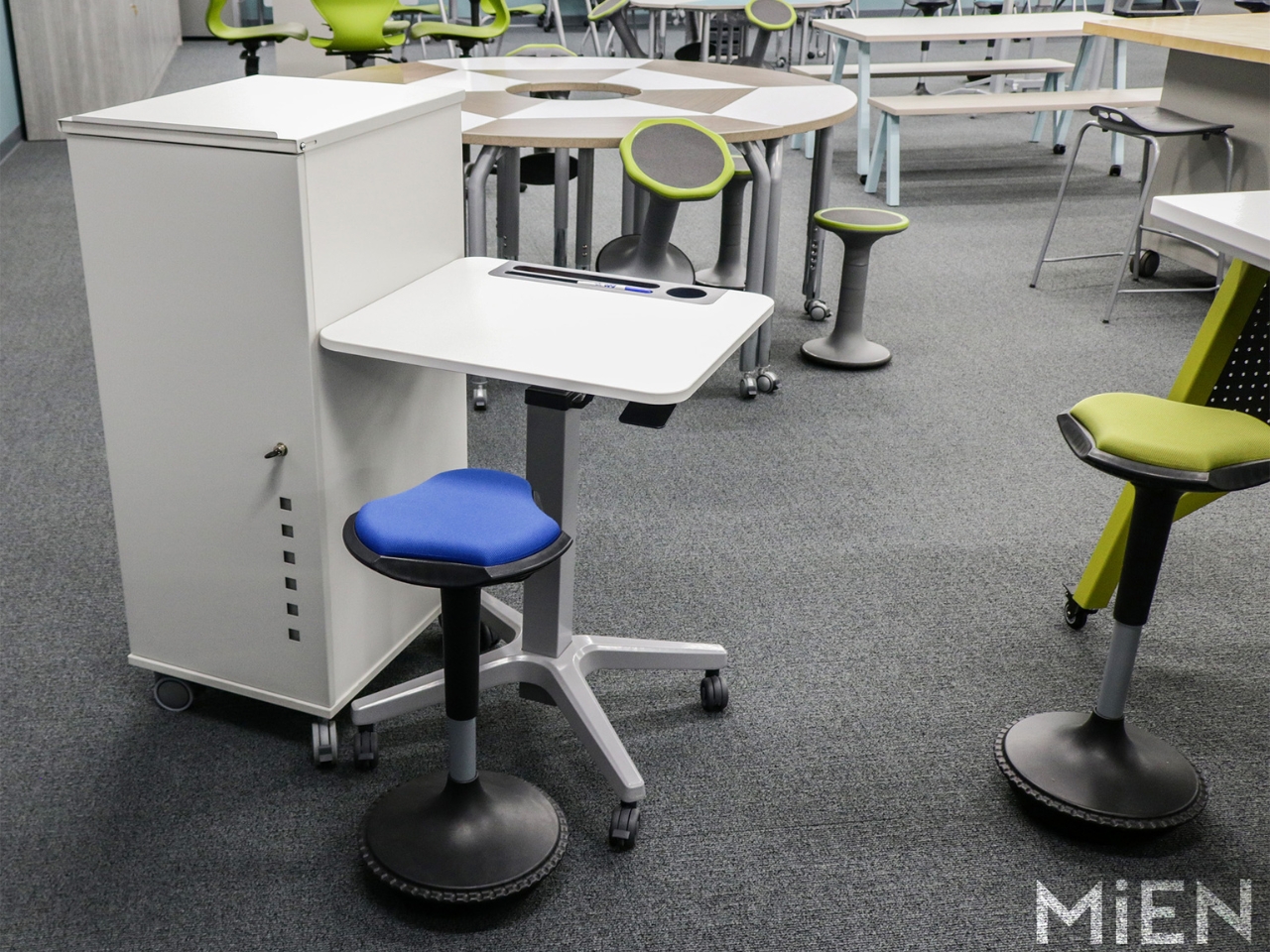
To cultivate a collaborative and forward-thinking space, skip the single teacher desk at the front of the classroom and instead incorporate more flexible teacher workstations throughout the classroom. Additionally, it’s important that the entire team always has easy access to important tools and documentation, including visual planning tools and technology tools that facilitate real-time information sharing.

Sustaining a collaborative partnership beyond the classroom
The strongest teacher-paraprofessional partnerships extend beyond daily classroom interactions. It’s important to maintain professional boundaries, but fostering genuine connection is a valuable facet of collaboration. By taking the time to understand each other, teams strengthen their shared trust––which is crucial when navigating challenging situations.
Teachers and paraprofessionals can also benefit from joint professional development, learning new strategies and methodologies alongside one another. By participating in the same training, teams develop shared vocabulary and conceptual frameworks. This fosters effective collaboration, where all team members are on the same page and working concurrently towards shared goals.
Transforming student outcomes through collaborative partnerships
The single most important predictor of a successful special education classroom might just be the quality of the adult partnerships within it. A strong educator team benefits students immensely, improving academic achievement, enhancing social-emotional development, and reducing behavioral incidents.
It’s important to remember that students are incredibly perceptive. They sense when adults are working well together, which in turn creates a safe space that allows for deeper learning. When teachers and paraprofessionals participate in intentional collaboration, they can transform special education classrooms into dynamic learning environments where everyone thrives.