

5 Steps to Designing a Truly Flexible Learning Environment
From an engaging curriculum to a positive school culture to talented teachers, there are many elements that contribute to a welcoming school environment that students want to come to every day. But even the best teachers can’t succeed unless their learning space is able to adapt to their teaching strategies and students’ needs.
In this post, we'll take a look at:
Creating an effective school environment is the result of many different factors coming together to support students, learning, and curriculum. Unique and inspiring learning spaces have the power to transform how a school functions, fostering connections and supporting the evolution of teaching and learning.
Most of all, these spaces accommodate schools’ ever-changing needs, ensuring today’s classrooms are adaptable for tomorrow’s teachers and learners. Taking inspiration from the successful transformation of Erie Elementary, here are five essential steps to designing a truly flexible learning environment:
1. Begin with a clear vision.
Every effective learning space begins with a strong purpose. Whether you’re building a new school or updating an existing one, it’s important to align the design with your educational philosophy.
At Erie Elementary, the district’s commitment to cooperative learning laid the foundation for the entire design process. Their goal was to create spaces to foster student interaction, creativity, and collaborative problem-solving, which made flexibility a top priority from the start.
2. Take inspiration from others.
You don’t have to start from scratch or create an elaborate design before knowing what will work for your school. Visiting other schools can spark new ideas and help your team visualize not only what’s possible, but what’s already working for others.
When Erie Elementary’s team toured a nearby campus, they were inspired by its energy and student-centered design. Seeing what worked in another real-world environment gave them a concrete model to build on and the confidence to make bold choices in their own design.


3. Choose the right partners.
The furniture partner you choose can make or break your vision. Look for a team that not only offers innovative and adaptable products but also collaborates with you to help you make selections that fit your educational goals and budget.
Erie Elementary partnered with MiEN to bring their vision to life. MiEN’s team brought a variety of flexible furniture options to the table, ensuring all of the school’s design decisions were realistic for their budget.
4. Empower teachers with choice.
Teachers know exactly what they need to help their students thrive. Empower teachers by designing flexible spaces that they can adapt to their teaching strategies––rather than the other way around.
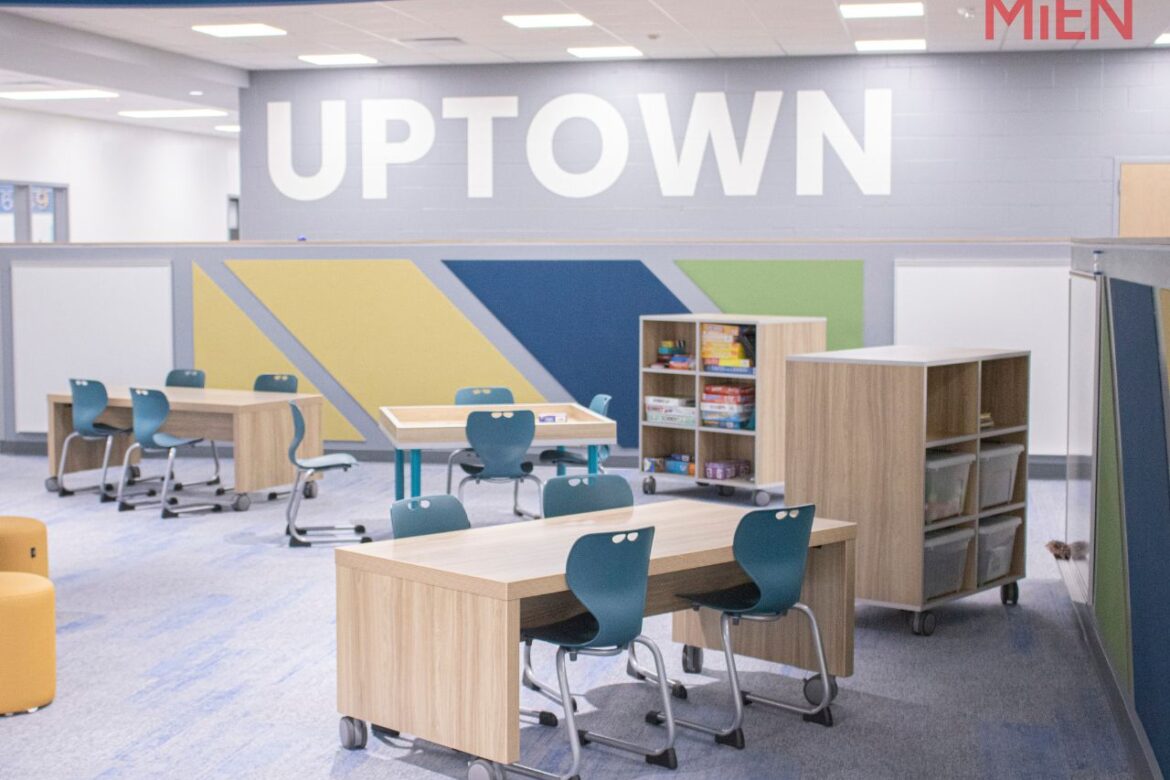
At Erie, mobility was non-negotiable. Every piece of furniture, outside of the teacher’s desk, needed to be moveable by one or two people. With that level of flexibility, teachers are able to reconfigure their classrooms multiple times each day to suit different activities. Plus, encouraging teachers to make their spaces their own has empowered them to experiment with customizing their layouts in unique and innovative ways.
5. Involve the whole community.
When the project allows for it, getting input from the school community can be an effective way to ensure your learning spaces meet everyone’s needs. Teachers, staff, and students experience learning environments differently, and their thoughts and ideas can be invaluable during the design process.
Erie Elementary factored input from their whole school community into the overall design. That feedback shaped everything from furniture choices to layout details, ensuring the final result met the needs of everyone who would use the space. Ultimately, this made it possible to design a campus that reflects its community, while also being equipped to evolve over time.


Designed for Flexibility, Built for the Future
When schools take a thoughtful, collaborative approach to design, it’s possible to create a learning masterpiece. Flexible learning environments empower educators, engage students, and make it possible to adapt educational spaces as needs evolve. By following these five steps, schools can create spaces that are not only functional today, but prepared to support the next generation of learners, too.
Ready to reimagine your own learning spaces? Explore MiEN Company’s unique and innovative flexible furniture solutions and discover how we can help bring your vision to life.