Designing Elementary Media Centers to Accommodate Growing Students: A Guide to Choosing the Best Furniture Sizes
- February 14, 2025
- MiEN

Media centers are evolving to become versatile hubs for learning, collaboration, and technology. These learning spaces must be flexible to support various activities, from individual reading to large group presentations to dynamic discussions between peers. In elementary schools, media centers must accommodate a wide range of student ages and abilities. Ensuring these spaces meet the unique physical and developmental needs of K-5 learners is crucial to maximize their comfort and engagement while in the. media center.
In this post, we'll take a look at:
In our recent blog post, we discussed why it’s important for schools to carefully select the appropriate furniture sizes to accommodate growing students. This is especially important in shared elementary school learning environments that must meet the needs of students who range in age, height, coordination, attention span, and general cognitive development.
One such shared learning space in elementary schools is the media center, which is used by students in kindergarten up to fifth or sixth grade. Designing elementary media centers with appropriately-sized furniture for every student who will use the space is key to fostering a productive learning environment that is accessible to all.
Elementary media centers benefit from the division of different learning areas into “zones” which help students compartmentalize their learning activities and stay concentrated on specific tasks within the large––and often distracting––shared library space. Learning zones in elementary media centers benefit from the addition of relevant furnishings that are tailored to students’ size and ergonomic needs.
Literacy is a key focus in elementary media centers, and as such, these learning spaces should include inviting areas where young learners can dive into stories and explore reading. Comfortable and ergonomic seating is essential in these zones, helping students stay calm and focused.
Young learners benefit from diverse seating options, including floor cushions, modular lounge seating, and comfortable benches. Elementary school students tend to have a shorter attention span and more amplified urges to move around. With several options to choose from, learners can wiggle, reposition themselves, and choose a reading spot that feels comfortable for them. These modular and flexible options enable students of every size and grade to find the perfect space to engage with their reading.
Designated computer areas in media centers enable young students to develop digital literacy skills under the guidance and support of librarians and teachers. Work stations in these areas should be height-appropriate for small students to ensure comfort and avoid strain.
For younger students in kindergarten and first grade, computer desks should be at a height of about 18 to 22 inches, increasing to about 25 to 28 inches for 2nd to 5th graders. Furthermore, pairing height-appropriate tables with adjustable chairs provides students with ergonomic support while they work on the computer, as well as a comfortable amount of clearance between the seat and work surface.
Adjustable-height tables are especially beneficial for computer labs in elementary media centers, as they allow for height modification for students across different grades. This adjustability has an additional benefit in that it also accommodates children with mobility devices or wheelchairs, ensuring ADA compliance at all computer stations.
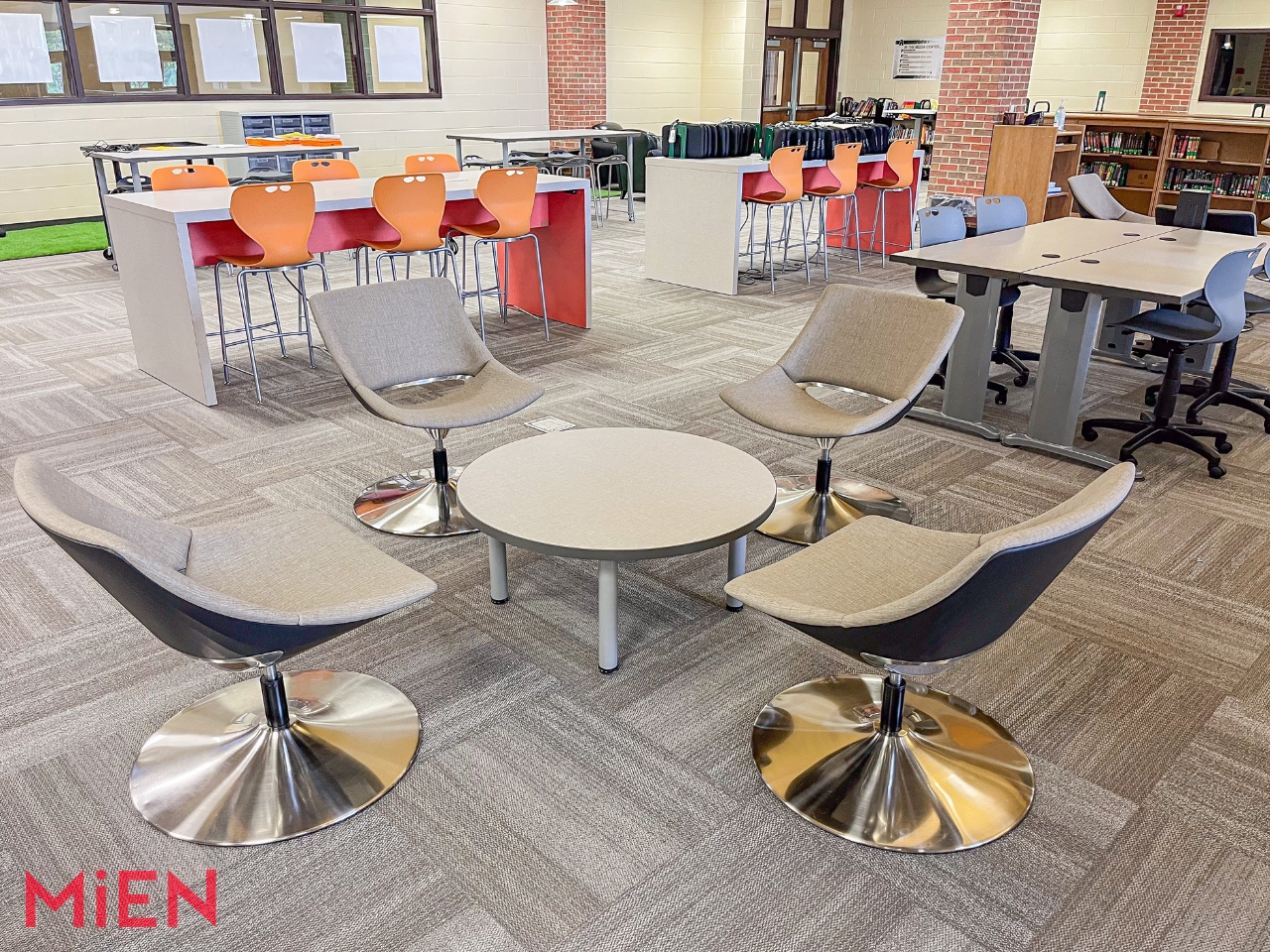
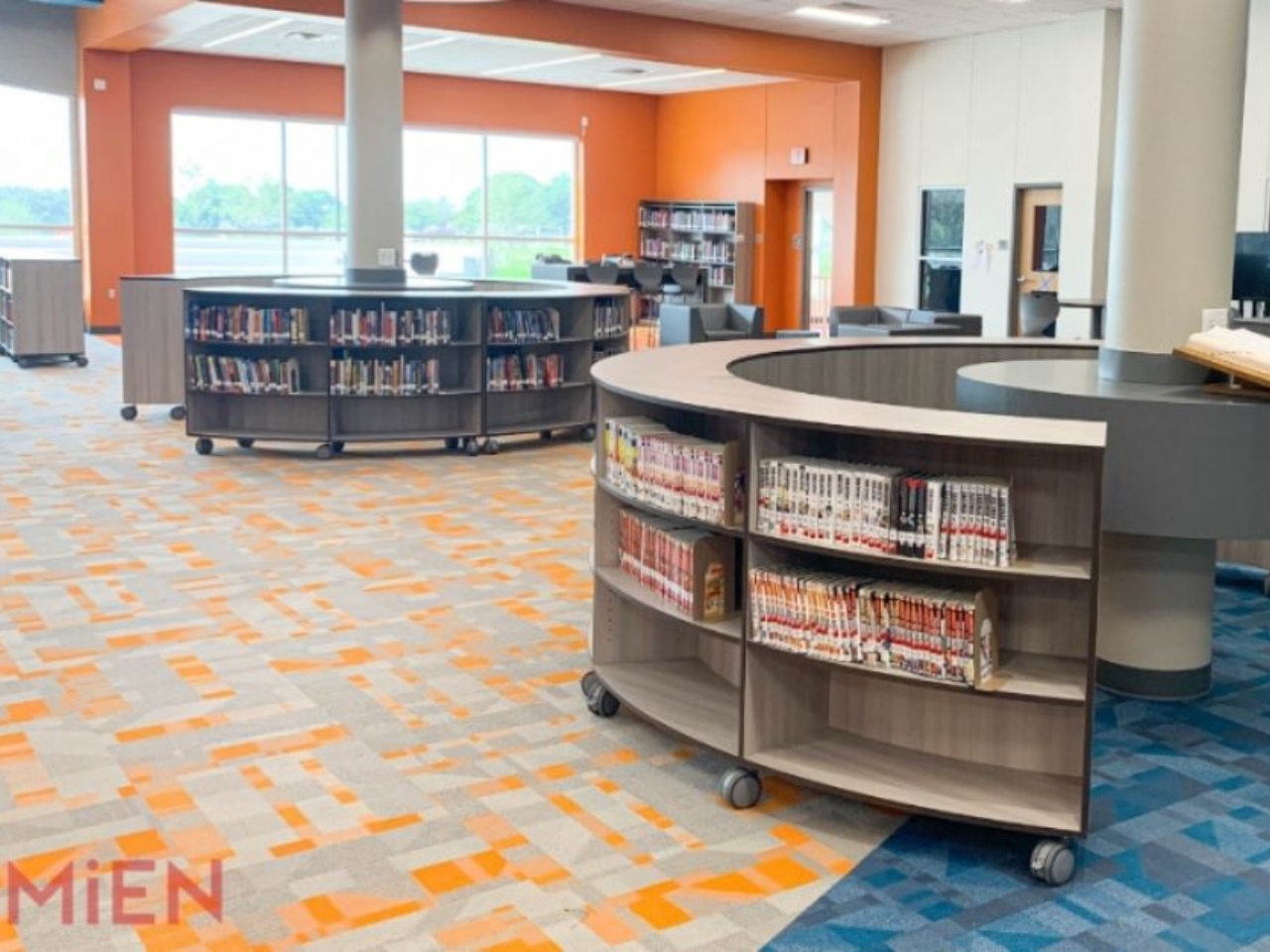
Lecture areas equipped with multimedia presentation tools provide a space for teachers or librarians to engage students in interactive lessons. In an average to large elementary media center, we recommend using A3+ student chairs with integrated desks and backpack storage to create a functional but adaptable learning space. These chairs can be oriented in rows to face a large presentation screen or in small groups for collaborative activities. Plus, the attached work surface enables students to take notes, complete assignments, or use personal devices.
In a small media center, lecture areas can be made flexible by utilizing stackable chairs that can be arranged in many configurations and stowed when not being used. If space is really tight, a mobile storage tower has a small footprint and will hold a set of up to 24 Flex seat pads, which make any floor space into a comfortable and organized area for teaching.
Comfortable and ergonomic furniture can really make a difference in young learners’ ability to stay focused and engaged. Chairs that are too high or awkward table heights can be distracting, taking students’ attention away from valuable learning time. Selecting furniture that meets students’ physical needs and appropriately accommodates their growth throughout all elementary grades is key to creating an ergonomic space that students can easily navigate and feel comfortable learning in.
This can be achieved in part by choosing furnishings that are adjustable, which makes it possible for learners of all ages to create a custom-fitted space for their learning. Adjustable furnishings also offer the benefit of flexibility, as they can be placed in many arrangements, paired with various coordinating furniture, and often contain casters or slides that make them easy to move around. This enables a highly adaptable space, which not only caters to the physical needs of students but also to the learning space needs of educators who utilize the space for their lessons.
Designing an elementary media center that supports the varying needs of growing learners is key to cultivating a comfortable and functional space for all. By selecting appropriately-sized furniture for the different zones of the media center, schools can create an accommodating space that adapts to students’ physical and developmental needs, enhancing focus and engagement. A welcoming and accessible media center environment encourages young learners to explore reading, researching, and technology tools, which is essential to help them build critical skills for higher grades and beyond.

