
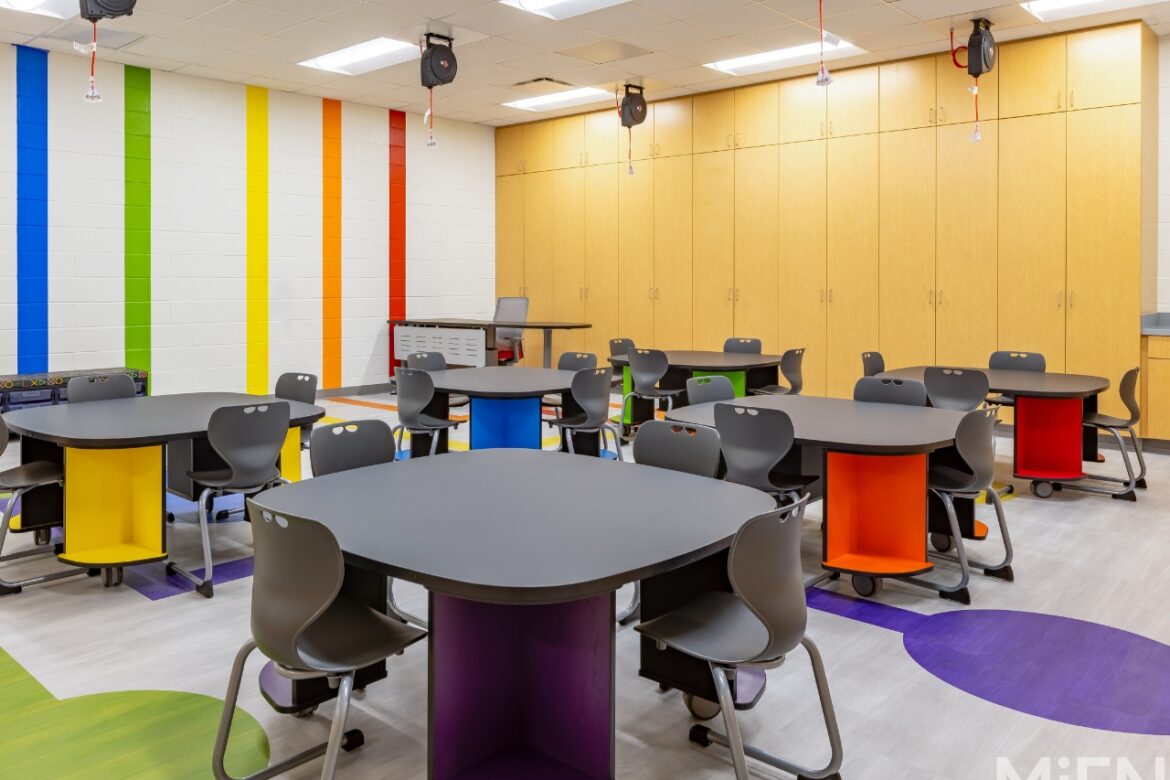
Collegedale Academy: A Tradition of Education Meets a Future-Focused Design
Collegedale Academy, a private school outside Chattanooga, had outgrown its historic elementary building—an aging facility in need of costly repairs despite its deep family ties. At the same time, Southern Adventist University—on whose land the school sat—needed the space for expansion.
In this post, we'll take a look at:
Rather than invest in an aging structure, Collegedale seized the opportunity to design a new, modern learning environment by relocating its elementary program to the middle school campus.
“It was the chance to create a space that truly reflected the way kids learn today,” said Beth Stone, Designer turned. Visual Arts teacher at Collegedale Academy. “It was a no-brainer.”
Designing for Students First
Stone had previously led the interior design of the middle school and agreed to take on the new project with one condition: “I would only do it if I could design for the students first and the teachers second.”
Her search for student-centered design solutions led her to MiEN. “What impressed me was that MiEN doesn’t just sell furniture,” she explained. “They research what classrooms need and keep moving forward. Every choice we made was about meeting the needs of our students and teachers.”
Versatile Spaces for Modern Learning
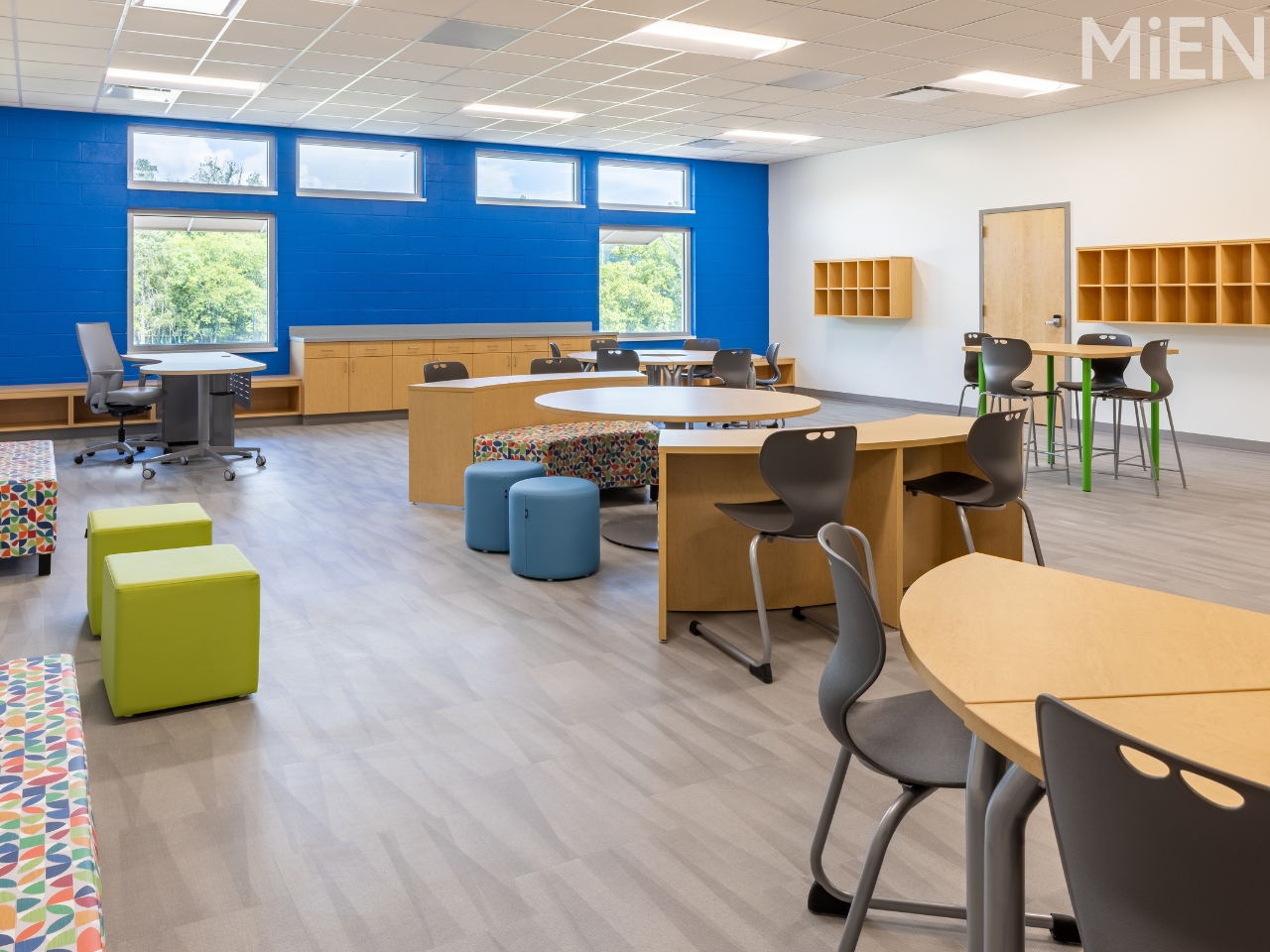
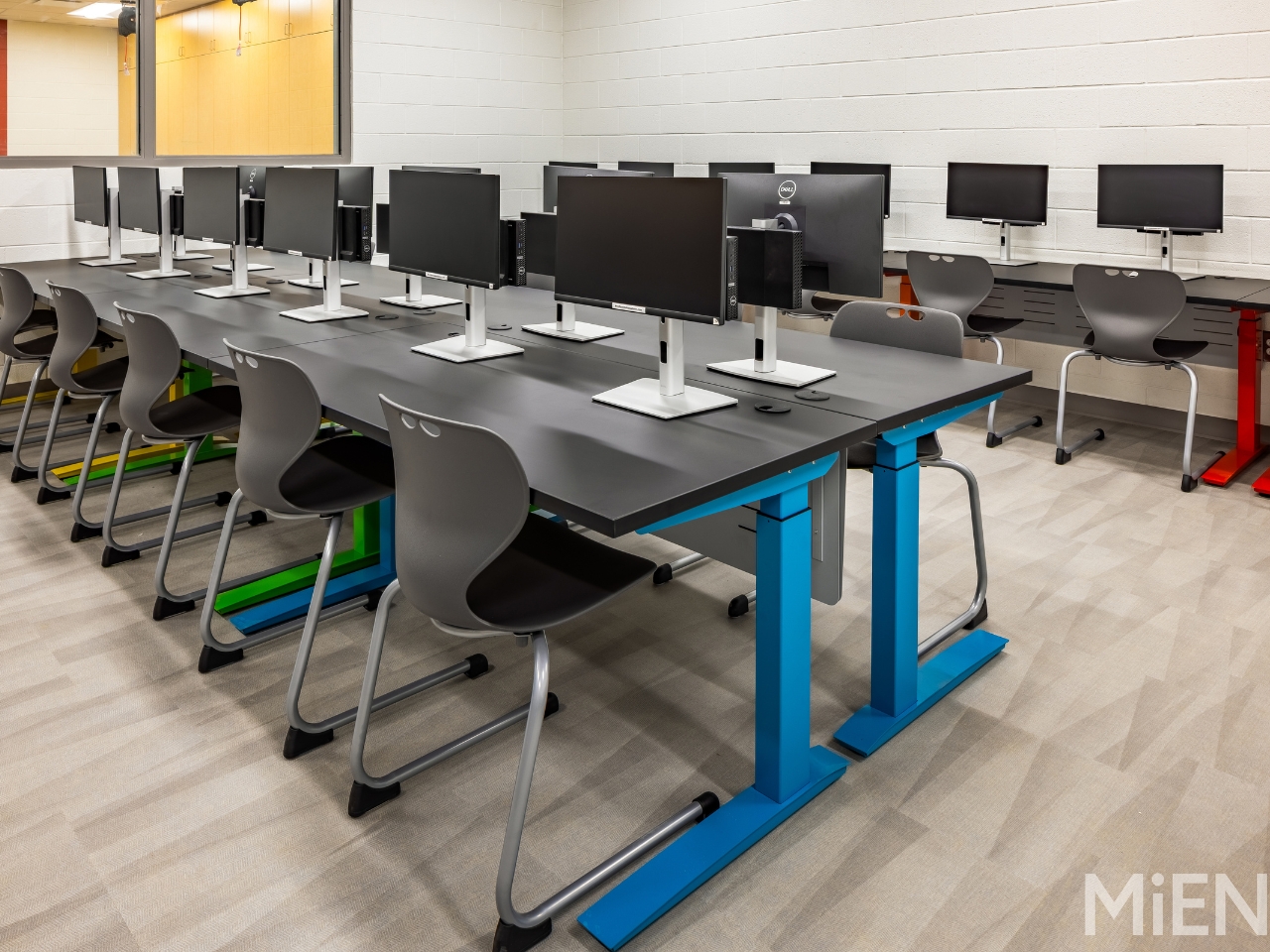
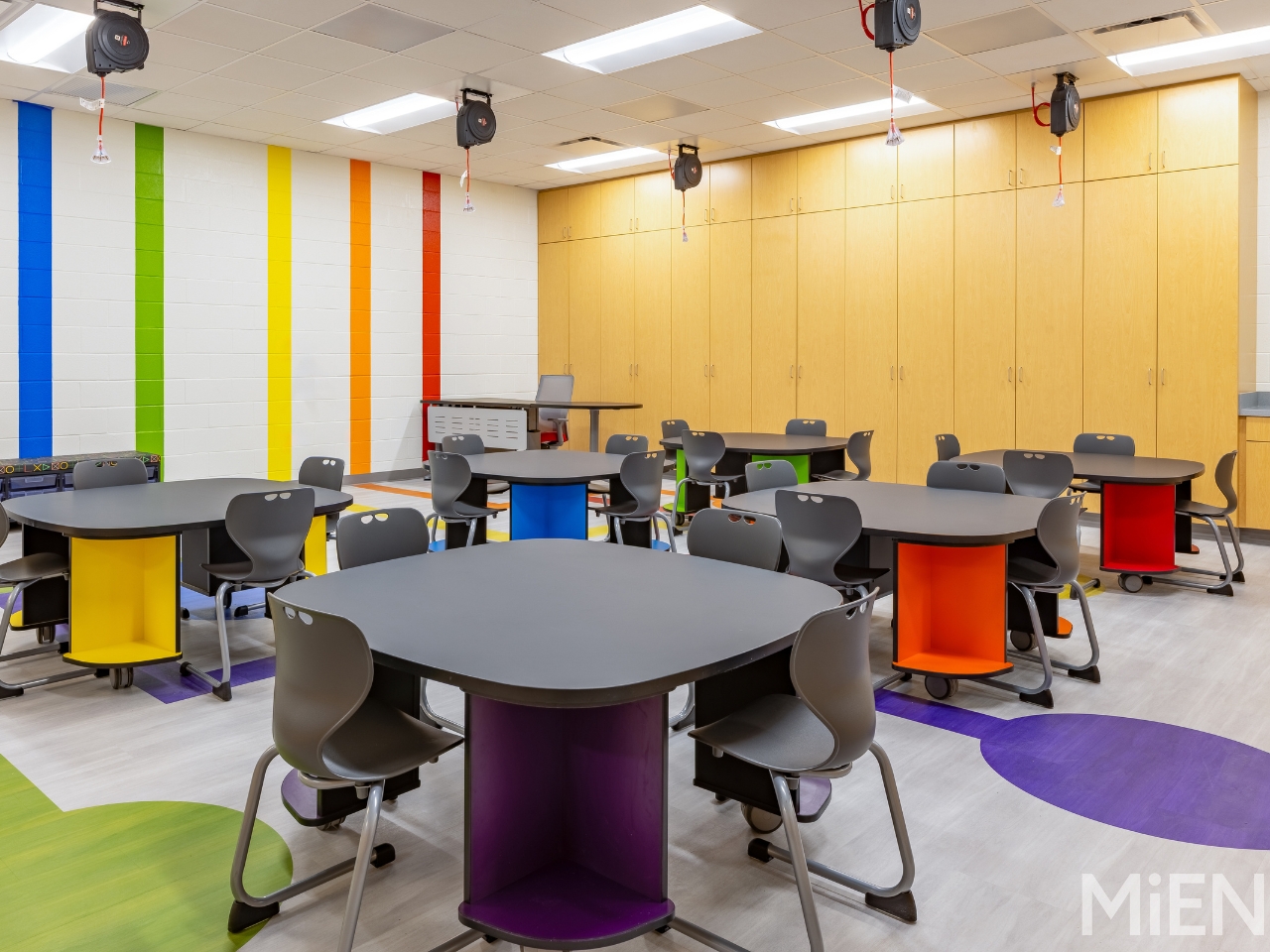
To bring their vision of student-centered learning to life, Collegedale Academy and MiEN prioritized creating spaces that could adapt as easily as the students and teachers who use them. The design emphasized flexibility, belonging, and joy, ensuring that every area could serve multiple purposes and inspire curiosity. Shared community hubs, such as the cafeteria and media center, were intentionally designed to transition quickly into classrooms, performance venues, or meeting spaces—maximizing the use of every square foot.
Interactive and sensory features add to the vibrancy of the school. A giant light-bright wall, sensory boards, and flexible seating invite students to explore, collaborate, and learn beyond the boundaries of traditional instruction. Even hallways and lobbies were reimagined as extensions of the classroom. Outfitted with mobile whiteboards, soft seating, and movable tables, these transitional spaces now support small-group work, tutoring sessions, and parent meetings.
Learning extends outdoors as well. Students gather by the campus creek for hands-on science lessons, use outdoor tables for lunch that easily transform into project workspaces, and enjoy areas designed to nurture both play and inquiry. Every element was created to “do more,” with each design choice focused on supporting a variety of teaching strategies and activities throughout the day.
“From the moment students walk in, I wanted them to feel this building was designed for them,” Stone explained. “Every space needed to spark curiosity and adapt to their needs without overwhelming them.”
While students immediately embraced the new environment, teachers also faced the challenge of adapting to flexible spaces.
Supporting Teacher Transition
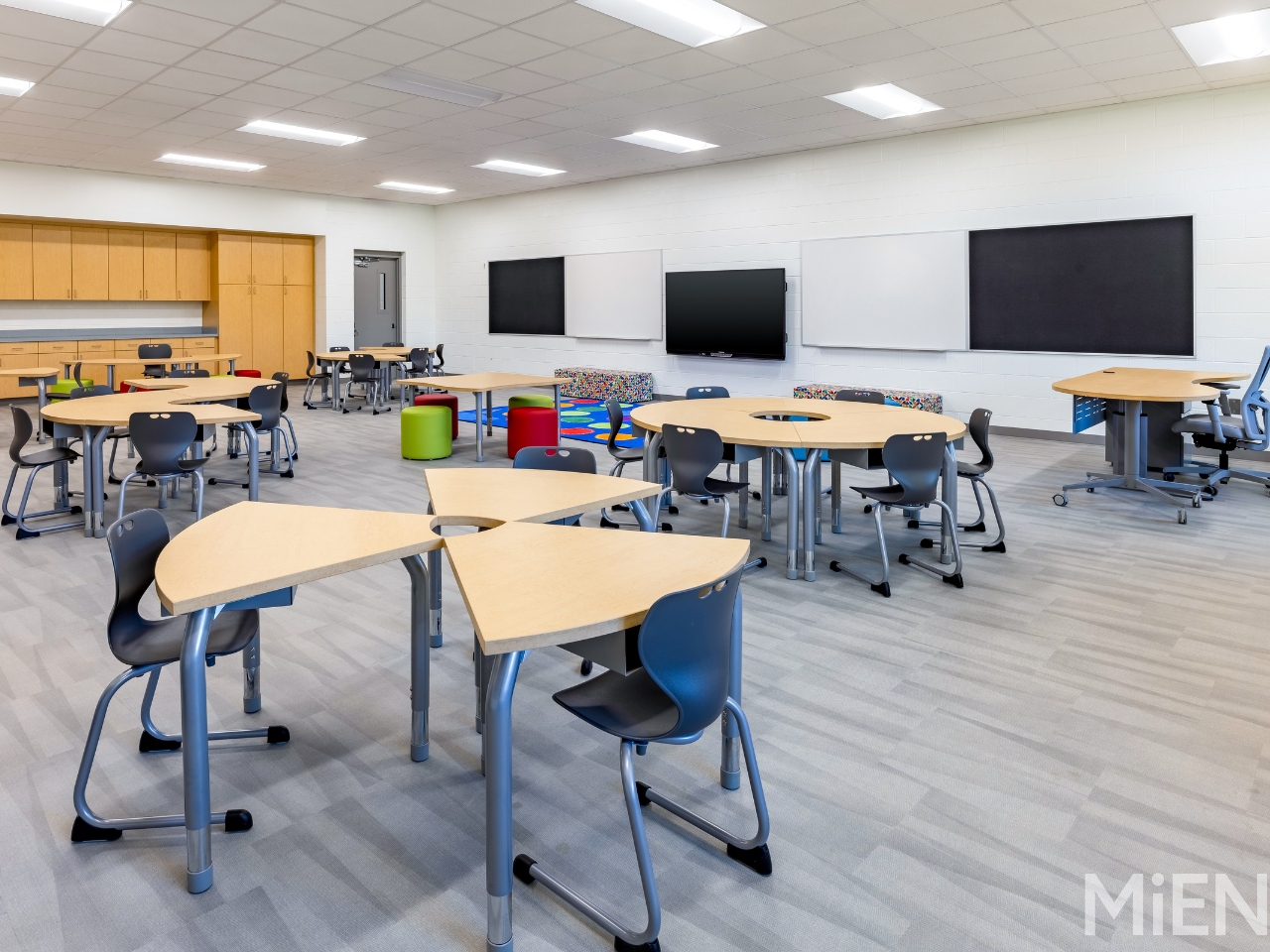
For teachers accustomed to traditional layouts, the transition to flexible spaces was a shift. Stone worked closely with colleagues to demonstrate how MiEN’s furniture could support their teaching styles.
“At first, some teachers wondered how the new layouts would work with their classroom routines,” Stone explained. “But once they began teaching in the space, they quickly saw the benefits. Within weeks, they were reimagining their rooms, adapting the furniture to fit their own themes, and discovering new ways to engage students.”
This collaborative approach helped build teacher confidence while reinforcing the original vision. “The beauty of MiEN’s furniture is that it leans into whatever teachers dream up,” she said.
A True Partnership
Stone credits her “dream team” of MiEN representatives Jonathan and Ryanne with helping bring her vision to life. “Jonathan isn’t just selling furniture—he’s selling education,” she said. “He and the MiEN team were as excited as I was to design spaces that inspire learning. They were true partners every step of the way.”
Transformative Outcomes
The impact of the new learning spaces was immediate and far-reaching. From the very first day, students expressed genuine excitement and pride in their environment. Many eagerly explored the light-bright wall, rearranged seating to collaborate in groups, and quickly began treating the space as their own. As Stone explained, “They could tell this building was made for them.”
Teachers also embraced the change, discovering how easily MiEN’s furniture could adapt to their instructional styles. Whether delivering traditional lessons or guiding project-based learning, educators found the flexibility empowering, reshaping their classrooms to reflect unique themes and approaches.
Parents were equally impressed by the transformation. For many who had attended the original building themselves, the updated design signaled a clear commitment to modern learning and showed that their children’s education was being prioritized.
The investment also proved efficient and forward-thinking. By designing multi-purpose areas and selecting durable, mobile furnishings, the school ensured that every dollar spent would deliver maximum long-term value.
Perhaps most importantly, the success of this project has built momentum for what comes next. Collegedale is already planning high school renovations guided by the same student-first philosophy, extending the vision of flexible, engaging learning spaces even further.
Looking Ahead
For Stone, the project was about more than furniture—it was about culture. “We created an environment that supports curiosity, creativity, and joy,” she said. “And with MiEN’s partnership, we built spaces where students feel they belong, and teachers are empowered to do their best work. More than classrooms, we built a model for how schools can design learning spaces that evolve with students, teachers, and communities.”