
Bring the Outdoors In: Biophilic Design for Healthy Indoor Spaces
For the majority of our history, humans have primarily lived, worked, and socialized in man-made spaces that provide us with the shelter and other amenities we need to survive. Although we spend much of our time in these built environments, the human mind and body has always been drawn back to nature and natural systems.
In this post, we'll take a look at:
An extensive body of research shows that humans’ desire to affiliate with nature is good for our wellbeing––even just feeling connected to nature provides health benefits, regardless of how much time one spends outdoors. If you’ve ever brought a plant into your office or classroom, you’ve probably experienced nature’s positive impacts firsthand.
As the world becomes increasingly centered around technology and commerce, there has never been a more urgent need for humans to reconnect with nature. Because nature has such a powerful impact on humans’ health and wellbeing, nature-inspired design can improve the comfort and function of our built environments, including offices, educational buildings, or even our homes.
Biophilic design offers a modern solution to bring nature into the indoor spaces that we live, learn, and work every day. Rooted in the idea that humans are innately connected to the natural world, biophilic design incorporates organic and nature-inspired design elements into indoor environments, supporting health, wellbeing, and productivity.
What is Biophilic Design?
Biophilic design integrates nature and organic elements into buildings through various design features. Some examples of biophilic design include adding windows to incorporate natural light and views of the outdoors, incorporating greenery, or creating water features.
This design approach is a core element in creating healthy buildings––indoor environments that support the physical and emotional health of their occupants. Healthy buildings prioritize visual elements, natural light, and acoustics that reduce stress and support focus, while also ensuring the air quality and materials used throughout the environment are safe for the physical health of all occupants.
The Impacts of Biophilic Design
Biophilic design transforms ordinary spaces into healthier, more inspiring environments where humans can comfortably and effectively live, learn, and work. Integrating biophilic elements into the design of educational and office spaces can significantly reduce anxiety and fatigue, while increasing cognitive performance, creativity, and overall enjoyment of the space.
In educational environments, biophilic design has been shown to improve student engagement and academic outcomes. Additionally, classrooms that maintain views of the outdoors and are furnished with natural materials can promote calmness, reducing behavioral issues and supporting better focus. Likewise, office spaces that use biophilic design see measurable gains in employee productivity and office attendance, as well as increased job satisfaction.


Biophilic Design in Action
Since the COVID-19 pandemic, creating healthy and functional environments has been a top priority for schools and companies with in-person facilities. The natural and organic elements of biophilic design not only beautify indoor environments but also support the cognitive and emotional wellbeing of the people using these spaces.
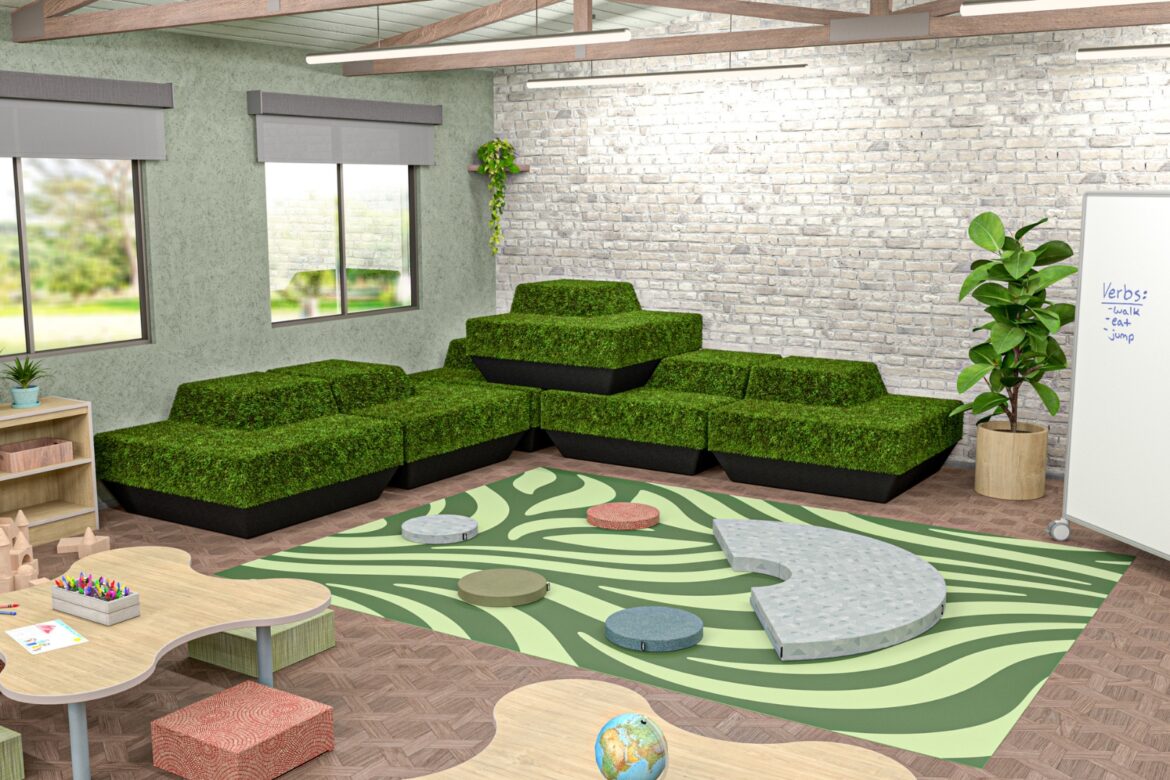
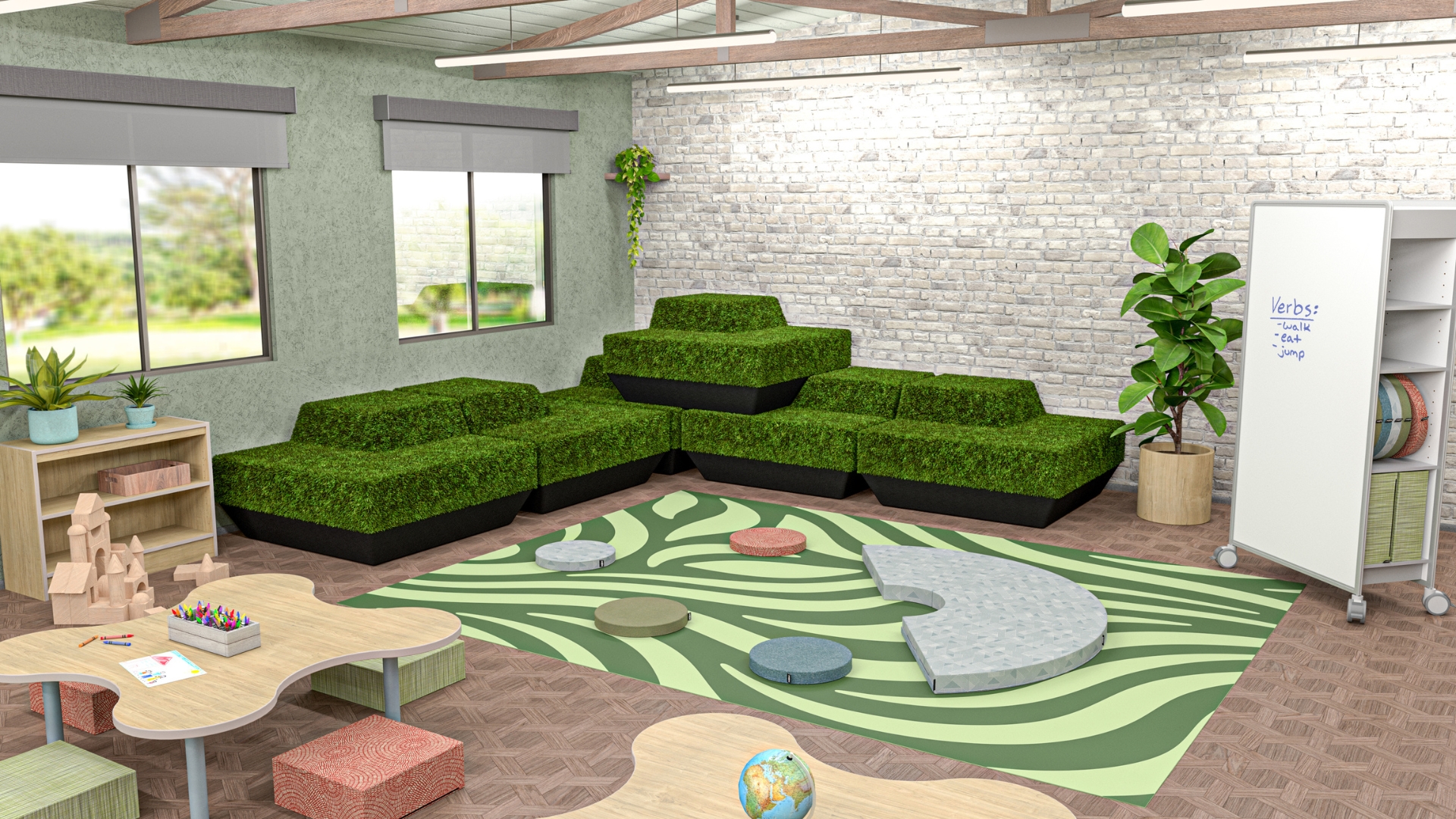
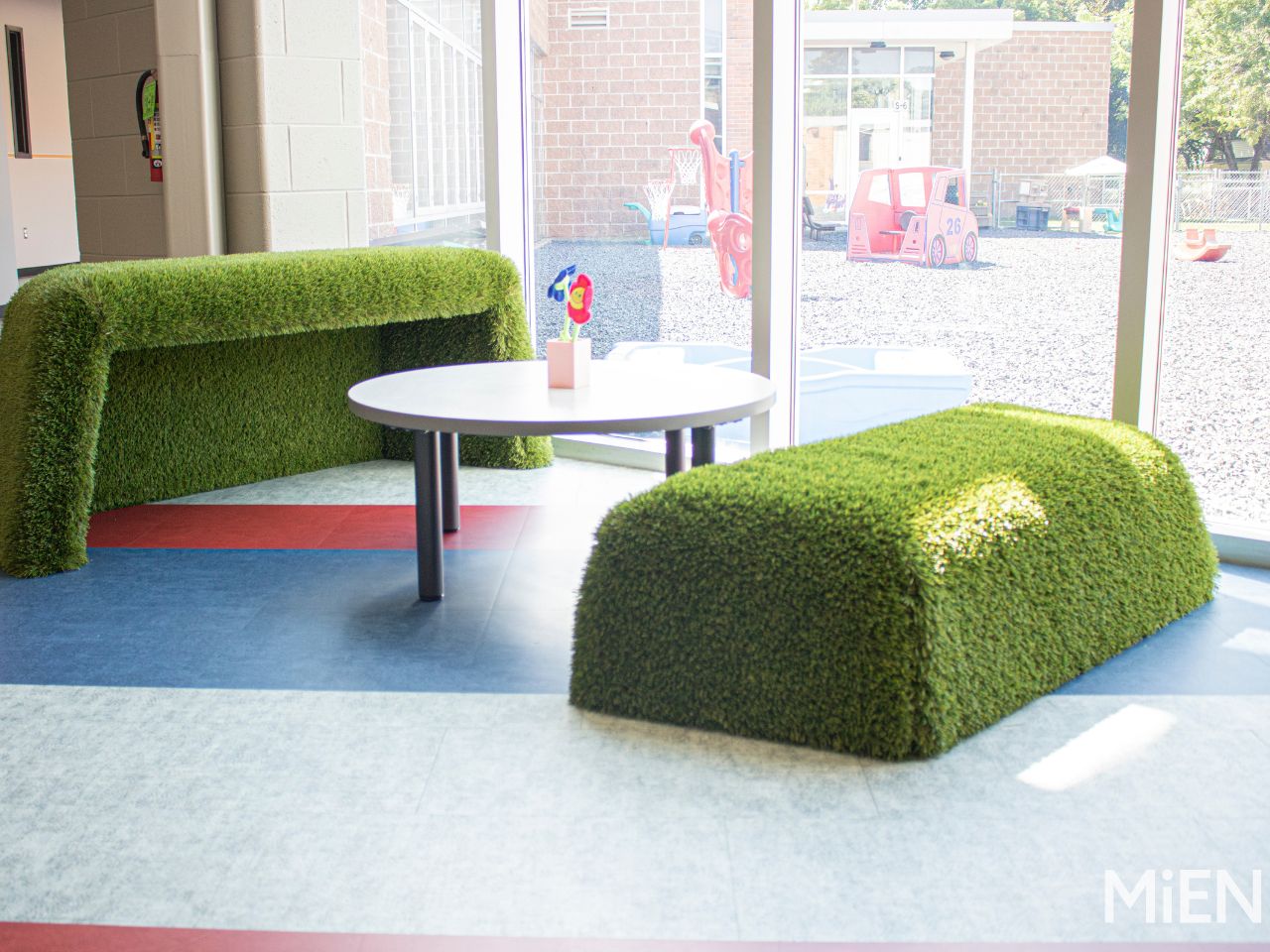
When designing educational environments, schools may include nature-inspired color palettes, natural finishes, or furnishings that mimic shapes or patterns in nature. For example, our GROW series of educational furniture brings the outdoors in with its grass-like turf surfaces. These flexible furnishings provide a unique sensory experience that is tactile and engaging, while also presenting a connection to nature.
In office spaces, designers may employ natural light and outdoor views, indoor plants or living walls, and natural materials. Similarly to learning spaces, office environments benefit from the addition of furnishings with nature-inspired finishes, such as woodgrain, stone, or concrete. Minimalist materials––like wood, steel, or woven fabrics––can also evoke biophilia. Plus, these materials provide the additional benefit of being more sustainable and promoting a healthier indoor environment.
Designing with Health and Wellbeing at the Forefront
We spend hours every day in our classrooms and offices, so it’s important that these spaces are designed with health and wellbeing at the forefront. With the understanding that spaces greatly influence our mood, behavior, and physical health, it’s clear that biophilic design is a positive step toward creating healthier, more meaningful environments.
At MiEN, we are exploring natural textures, sensory-rich materials, and nature-inspired aesthetics to help transform schools and offices into environments where people can thrive. Plus, as a sustainability-focused company, we are deeply committed to understanding the way our furniture and designs impact the environment.
Whether we’re designing classrooms or office spaces, we truly understand the importance of bringing nature into indoor environments. Contact a MiEN representative today to learn how we can help you transform dull interiors into biophilic environments that promote wellbeing.